A 245D license is the Minnesota Department of Human Services credential that allows a provider to legally deliver home and community-based services to people with disabilities, seniors, or others receiving waivered services. Without it, an organization cannot bill Medicaid for services like personal care, respite care, or supported living. For entrepreneurs entering this field, however, the licensing process can feel overwhelming, particularly given the paperwork, background studies, and ongoing compliance work involved. This guide breaks down what a 245D license covers, who needs one, and how to keep it in good standing once it is issued.
What Is a 245D License?
Direct answer: A 245D license is a Minnesota DHS authorization under Minnesota Statute 245D that permits an organization to provide home and community-based services, including basic support services, intensive support services, and specific waivered services for people with disabilities or seniors.
In practice, this license covers a wide range of programs, from in-home support to integrated community supports. Consequently, a provider cannot legally accept Medicaid waiver referrals without it. Because the license is tied to specific service categories, a provider offering multiple service types often needs additional variances or amendments as the business grows. As a result, understanding exactly which service category applies to your organization is the first real decision in the entire process.
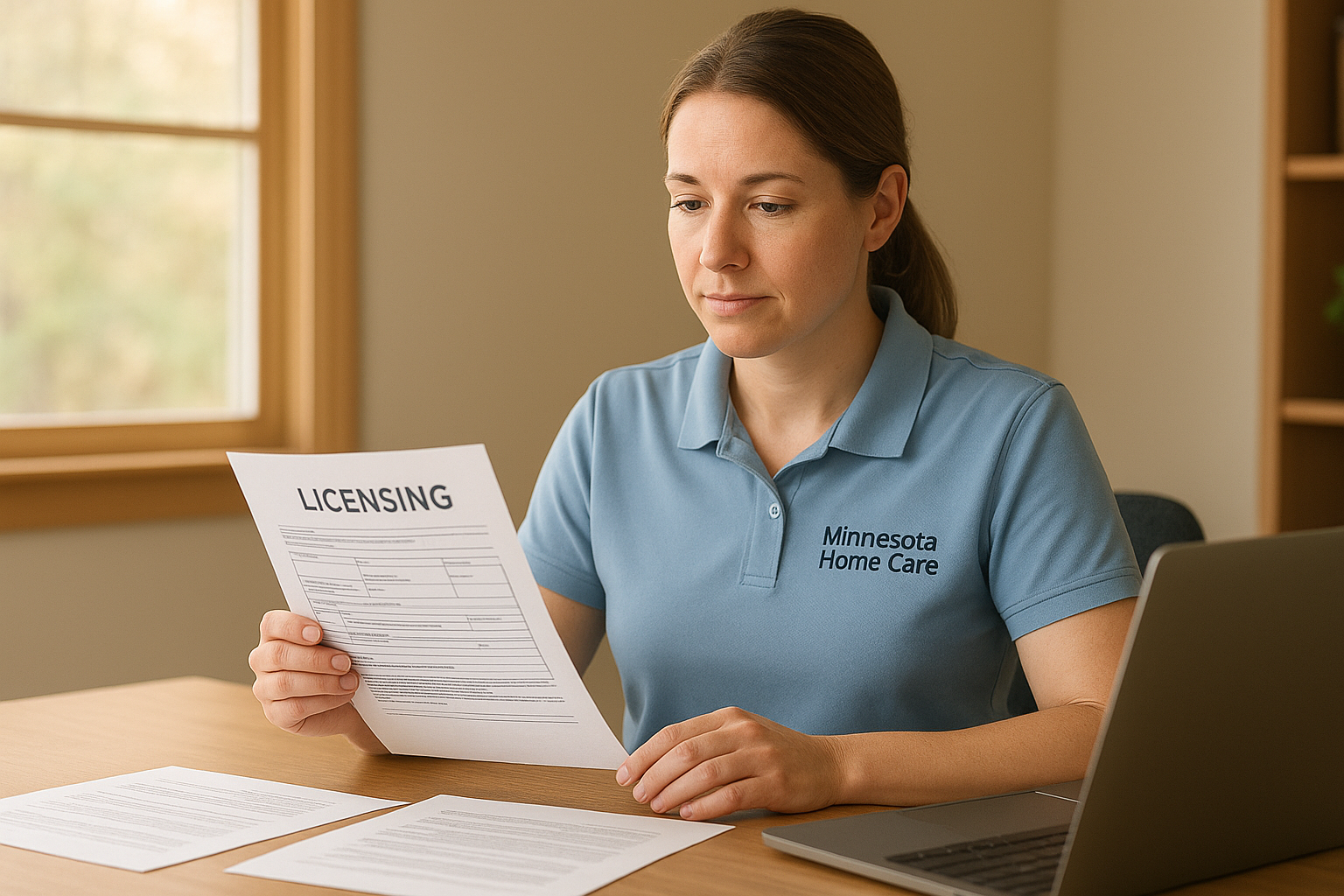
Reviewing 245D license paperwork carefully before submission helps avoid delays during the DHS review process.
Who Needs 245D Licensing in Minnesota?
Generally, any organization delivering home and community-based services under a Medicaid waiver needs 245D licensing before it can bill for that care. This includes agencies serving people with disabilities, individuals with brain injuries, and seniors who qualify for waivered services rather than institutional care. According to Minnesota DHS provider records, thousands of organizations across the state currently hold active 245D licenses, which reflects just how central this credential has become to the home care industry.
Not every provider fits this mold, though. For example, a straightforward home health aide agency billing private insurance may not need a 245D license at all. In contrast, any organization accepting waivered service referrals almost certainly does. If you are unsure which category applies, a detailed complete guide to Minnesota 245D licensing can help clarify the distinctions before you file anything with the state.
How to Get a 245D License: A Step-by-Step Process
The path from application to an active 245D license follows a fairly predictable sequence. Below is the general process most Minnesota providers follow.
- Identify your service category. Determine whether your organization will offer basic support services, intensive support services, or another category covered under the 245D license framework.
- Complete required training. Finish the DHS-approved training modules covering person-centered planning, incident reporting, and licensing standards. A closer look at 245D training requirements in Minnesota explains exactly which modules apply to your role.
- Submit your application and policies. File the license application along with policies covering staffing, service delivery, and emergency procedures.
- Clear background studies. Every staff member with direct client contact must pass a background study through NETStudy 2.0 before beginning client-facing work.
- Prepare for the licensing review. Host the DHS licensor for a site visit and document review, and resolve any variances they raise.
- Maintain ongoing compliance. Once licensed, track reevaluation deadlines and DWRS rate documentation to keep the license active.

Providers who hold a 245D license can deliver home and community-based services that many families depend on.
245D License Requirements and Compliance Obligations
Once a provider secures a 245D license, the real work of staying compliant begins. Specifically, DHS expects providers to maintain updated policies, track staff training, and respond promptly to any licensing correspondence. In addition, providers must undergo periodic reevaluations, where a licensor reviews records, interviews staff, and checks that documented practices match what actually happens in service delivery.
Furthermore, DWRS rate audits examine whether a provider's billed rates align with the services actually delivered and documented. Similarly, any change in ownership, service location, or leadership typically requires a licensing amendment rather than a fresh application. Providers operating under 245D and considering a group home model should review a focused group home licensing and 245D compliance guide for setting-specific requirements. For the official regulatory text, the Minnesota Department of Human Services publishes current licensing standards directly.
Common Mistakes Providers Make With Their 245D License
Even experienced operators run into trouble with 245D licensing, often for avoidable reasons. Below are the mistakes that show up most frequently during reevaluations and audits.
- Treating policy documents as a one-time task instead of updating them as services change.
- Letting background studies lapse for new hires before they start client-facing work.
- Underestimating the documentation DWRS rate audits require, which leads to rate disputes later.
- Ignoring corrective action plan deadlines, which can escalate into further licensing sanctions.
- Mixing payroll and financial records in ways that make compliance reviews harder than necessary.
Interestingly, many of these issues are financial in nature rather than clinical. Therefore, providers who pair strong compliance practices with dedicated bookkeeping and payroll support tend to move through reevaluations with far less friction. A closer look at what a 245D compliance consultant training program covers can help staff understand these obligations before problems appear.
How HAR Financial Services Supports 245D Licensed Providers
HAR Financial Services, based in Minneapolis, works specifically with DHS-licensed providers, including 245D and 245A operators, home care agencies, and waivered service organizations. The firm handles bookkeeping, payroll, DWRS rate audit preparation, and corrective action plan support alongside standard accounting work. In one notable example, HAR managed a full payroll migration for 240 clients when its former processor shut down, completing the transition with zero missed payrolls and zero compliance gaps.
Because HAR keeps its team in-house rather than offshore, providers get a direct point of contact instead of a rotating support queue. Consequently, when a DHS auditor calls with a question, someone who already knows the file picks up the phone. Providers exploring accounting support built around 245D compliance can review the firm's dedicated 245D services in Minneapolis page, or visit haraccounting.com to book a free consultation.

Accurate financial records make DWRS rate audits and 245D license reevaluations far less stressful.
Frequently Asked Questions About 245D Licenses
What is a 245D license?
A 245D license is a Minnesota DHS authorization under Minnesota Statute 245D that allows a provider to deliver home and community-based services, such as personal care and supported living, to people who qualify for waivered services.
How do I apply for a 245D license in Minnesota?
You apply through the Minnesota DHS licensing portal, submitting policies, staff qualifications, and facility information, then completing required training and background studies before a licensor reviews the file.
How long does it take to get a 245D license?
Most applicants wait between three and six months, depending on how complete the application is and how quickly background studies clear through NETStudy 2.0.
How much does a 245D license cost?
DHS charges application and annual license fees that vary by service type and provider size. Most providers also budget separately for training, policy development, and ongoing compliance support.
What is the difference between a 245D license and a 245A license?
A 245D license covers home and community-based services delivered in a person's own home or community setting, while a 245A license typically governs licensed programs operating out of a facility, such as certain residential settings.
Who needs a 245D license in Minnesota?
Any organization providing basic support services, intensive support services, or specific waivered services to people with disabilities or seniors under Medicaid waivers generally needs a 245D license before billing for those services.
What happens if I operate without a 245D license?
Operating without a required 245D license can result in fines, forced closure, and an inability to bill Medicaid, along with potential legal exposure for the individuals being served.
How often is a 245D license renewed or reevaluated?
DHS reevaluates most 245D licenses periodically, and providers must also respond to any licensing variances, corrective action plans, or complaint investigations that arise between reevaluations.
What is NETStudy 2.0 and why does it matter for 245D licensing?
NETStudy 2.0 is the state background study system DHS uses to screen staff for 245D licensed programs. Every employee with direct client contact must clear it before starting work.
What common mistakes cause 245D license delays or denials?
Incomplete policies, missing background studies, and underestimating DWRS rate documentation are among the most common reasons applications stall or licenses face corrective action.
What is a corrective action plan under a 245D license?
A corrective action plan is a formal document a provider submits to DHS explaining how it will fix a licensing violation. Failing to follow through can lead to further sanctions or license revocation.
Can an accounting firm help with 245D license compliance?
Yes, an accounting firm experienced with DHS providers can support DWRS rate audits, payroll compliance, and financial documentation that DHS reviews during reevaluations, which reduces the administrative burden on the provider.
Final Thoughts on Getting and Keeping a 245D License
Ultimately, a 245D license is more than a one-time application. It is an ongoing commitment to training, documentation, and financial accuracy that DHS revisits regularly. Providers who treat compliance as a continuous process, rather than a once-a-year scramble, tend to move through reevaluations and DWRS audits with far less stress. Above all, pairing strong clinical practices with dedicated financial and payroll support gives a licensed provider the best chance of staying in good standing for the long run. For Minnesota organizations navigating this process, working with a firm that already understands 245D licensing, such as HAR Financial Services, can turn a confusing regulatory burden into a manageable part of running the business.