Bookkeeping cleanup is the structured process of correcting inaccurate, incomplete, or outdated financial records so a business can trust its own numbers again. For many small business owners in Minneapolis and across Minnesota, months of missed transactions, mismatched bank statements, or DIY spreadsheet errors pile up quietly until tax season forces a reckoning. HAR Financial Services, a Minneapolis-based accounting firm founded in 2006, has guided hundreds of small businesses through exactly this kind of recovery.
Consequently, understanding what a cleanup actually involves, how long it takes, and what it costs helps owners decide when to act instead of letting the backlog grow. This guide walks through the full process, the warning signs, and the mistakes to avoid.
Quick answer: A bookkeeping cleanup reconciles bank accounts, corrects miscategorized transactions, and rebuilds accurate financial statements for a past period. It usually takes two to six weeks and is the necessary first step before ongoing monthly bookkeeping can begin.
What Is Bookkeeping Cleanup?
Bookkeeping cleanup is a one-time project that fixes past errors in a company's financial records rather than maintaining current ones. In practice, it means going back through weeks or months of transactions, matching them against real bank and credit card statements, and correcting anything that was recorded wrong or never recorded at all.
Unlike regular monthly bookkeeping, which keeps records updated as transactions happen, a cleanup looks backward. As a result, it often uncovers duplicate entries, uncategorized expenses, and payroll discrepancies that have been sitting untouched for months. According to the Internal Revenue Service, businesses are required to keep supporting records for income, deductions, and credits, which makes accurate books a compliance issue, not just a convenience.
A structured bookkeeping cleanup organizes scattered records into accurate, reconciled financial statements.
Signs Your Books Need a Cleanup
Several warning signs tend to appear before a business owner realizes how far behind their records have fallen. For example, bank accounts that have never been reconciled, profit and loss reports that do not match the actual bank balance, and receipts stuffed in a drawer instead of logged are all common indicators.
In addition, owners often notice they cannot answer basic questions about cash flow or profitability outside of tax season. Similarly, a previous bookkeeper who missed deductions or filed late frequently leaves behind records that need correction before anything moves forward. If any of these sound familiar, a books cleanup is likely overdue rather than optional.
Above all, growing payroll complexity is a major trigger. Businesses that expand from a handful of employees to a real team often outgrow spreadsheet-based tracking, and errors compound quickly once multiple pay schedules and tax deposits are involved.
The Bookkeeping Cleanup Process, Step by Step
A thorough cleanup follows a consistent sequence regardless of industry. Below is the process HAR Financial Services applies for clients who arrive with months, or sometimes years, of unreconciled records.
- Gather all financial records. Collect bank statements, receipts, invoices, and prior tax returns from the messy period, going back to the last month that was confirmed accurate.
- Reconcile every account. Compare each bank and credit card account line by line against statements to catch duplicate entries, missing deposits, and unrecorded expenses.
- Categorize and correct transactions. Fix miscoded expenses and separate personal spending from business spending using a proper chart of accounts.
- Review payroll and tax filings. Confirm that withholdings, deposits, and filings for the cleanup period match what was actually paid to employees and agencies.
- Generate corrected financial statements. Produce an accurate profit and loss statement and balance sheet so the owner finally has a reliable financial picture.
- Set up ongoing systems. Establish a consistent monthly bookkeeping cadence to prevent the same backlog from building up again.
Notably, this same discipline is what allowed HAR to migrate 240 payroll clients to a new processor with zero missed payrolls and zero compliance gaps when their previous provider shut down. That level of accuracy under deadline pressure is the standard applied to every cleanup project.
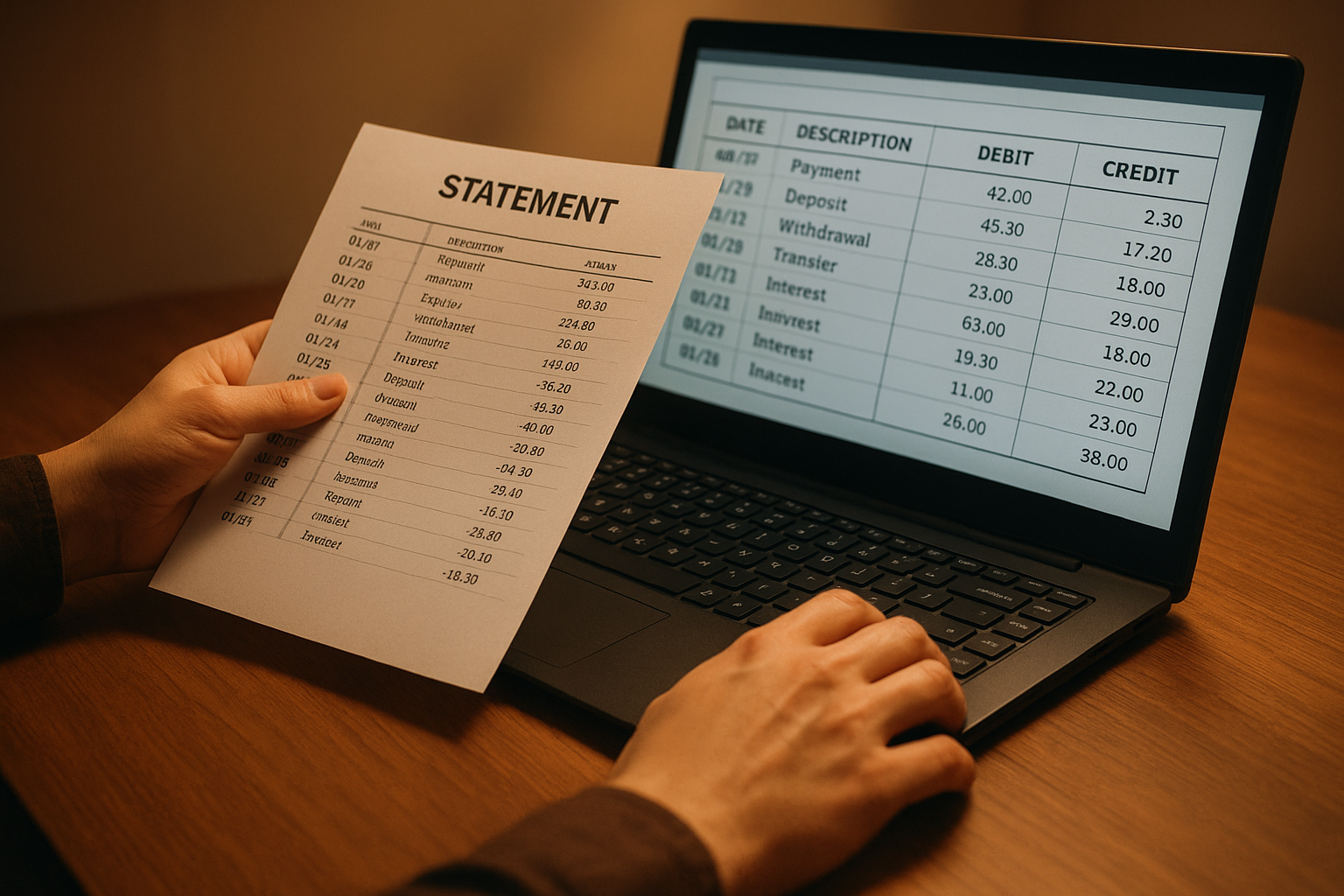
Reconciling every transaction against statements is the core of any accurate bookkeeping cleanup.
How Much Does Bookkeeping Cleanup Cost?
Cleanup pricing depends primarily on how far behind the records are and how many transactions need review. Therefore, a firm typically reviews the books first before quoting a flat project fee rather than charging blindly by the hour.
For context, ongoing monthly bookkeeping alone often runs around $500 per month once records are current, while payroll services average around $200 per month. Clients who bundle both services average closer to $700 per month combined. A cleanup project is usually quoted separately since it addresses a fixed backlog rather than ongoing work, and many firms, including HAR Financial Services, offer free catch-up bookkeeping and a free consultation before any charge applies.
Common Mistakes During a Books Cleanup
Even well-intentioned attempts at self-service cleanup can go wrong. One frequent mistake is skipping bank reconciliation entirely and instead relying on memory or partial statements, which leaves errors buried in the books.
Another common issue is mixing personal and business expenses, which distorts profitability and complicates tax filings later. Likewise, rushing the payroll review step can leave withholding mismatches unresolved, creating compliance exposure with state and federal agencies. Consequently, a methodical, document-by-document approach almost always outperforms a quick pass through the numbers.
Businesses operating under specific regulatory frameworks face an added layer of risk. Minnesota DHS-licensed providers, for instance, must align their financial records with reevaluation requirements, DWRS rate audits, and background study compliance under NETStudy 2.0. A generic cleanup that ignores these industry-specific rules can leave a provider technically caught up on paper but still exposed during an audit.
Why Local, In-House Accountability Matters
Many bookkeeping and payroll companies today operate entirely offshore or remotely, which can make it harder to reach the person actually handling a project. In contrast, HAR Financial Services works primarily out of a renovated office at 2304 Park Ave S in Minneapolis, where clients can sit down directly with the bookkeeper managing their accounts.
This matters most when something goes wrong mid-cleanup. A missing document, an unclear transaction, or a payroll discrepancy is far easier to resolve with a direct phone call than through a rotating support queue. Furthermore, twenty years of serving the Minneapolis business community, including a large share of immigrant-owned businesses, has built the kind of trust that comes from consistent, accountable work rather than volume pricing.
For businesses weighing whether to tackle a cleanup internally or bring in outside help, resources such as HAR Financial Services outline what a proper cleanup involves before committing to a provider. Reviewing a firm's process, credentials, and guarantees beforehand helps avoid a second cleanup down the road.

A completed bookkeeping cleanup gives owners a clear, corrected view of profit and cash flow.
When to Bring in Professional Help
Small backlogs covering a month or two can sometimes be corrected by a diligent owner working carefully through accounting software. However, once the backlog spans multiple quarters or involves payroll, professional support becomes far more reliable.
Firms that are members of organizations such as the American Institute of Professional Bookkeepers follow established standards for accuracy and ethics, which offers some assurance when handing over sensitive financial data. Similarly, checking whether a firm is an IRS Authorized E-File Provider adds a layer of credibility for tax-related corrections. For a deeper explanation of bookkeeping fundamentals, the Wikipedia overview of bookkeeping is a useful starting reference.
Ultimately, the decision often comes down to time and risk tolerance. Businesses juggling growth, payroll, and licensing compliance rarely have the spare hours to comb through a year of transactions, which is exactly the gap a dedicated cleanup service fills.
Frequently Asked Questions About Bookkeeping Cleanup
What is bookkeeping cleanup?
Bookkeeping cleanup is the process of correcting inaccurate, missing, or outdated entries in a company's financial records so the books reflect what actually happened. It typically involves reconciling accounts, fixing miscategorized transactions, and producing accurate financial statements.
How long does a bookkeeping cleanup take?
Most bookkeeping cleanups take between two and six weeks, depending on how far behind the records are and how many accounts need reconciliation. A cleanup covering a full year of neglected books can take longer than one covering a few months.
How much does bookkeeping cleanup cost?
Costs vary based on transaction volume and how long records were neglected, though ongoing monthly bookkeeping often runs around $500 per month once the backlog is resolved. Firms typically quote cleanup projects separately after an initial review.
What are the signs my business needs a bookkeeping cleanup?
Common signs include unreconciled bank accounts, missing receipts, mismatched profit and loss figures, and no clear picture of cash flow until tax season. If reports feel unreliable, a cleanup is usually overdue.
Can I do bookkeeping cleanup myself?
Small backlogs of a month or two can sometimes be fixed with careful, methodical work in accounting software. However, larger or multi-year messes usually benefit from a professional bookkeeper who can spot errors an owner might miss.
What is the difference between bookkeeping cleanup and regular bookkeeping?
Regular bookkeeping keeps current records updated as transactions happen, while cleanup goes backward to correct past errors and catch up neglected periods. Cleanup is a one-time project that often precedes a switch to consistent monthly service.
What documents do I need for a bookkeeping cleanup?
You typically need bank and credit card statements, receipts, invoices, payroll records, and prior tax returns covering the period being cleaned up. Having these organized in advance speeds up the process significantly.
What common mistakes happen during bookkeeping cleanup?
Common mistakes include skipping bank reconciliation, misclassifying personal expenses as business costs, and ignoring payroll tax discrepancies. Rushing the process without verifying every transaction leads to lingering errors.
Will bookkeeping cleanup affect my taxes?
Yes, cleaned-up books often reveal missed deductions and correct income reporting, which reduces the risk of penalties from inaccurate filings. Accurate records also make it easier to respond quickly to any IRS request.
How often should a business need bookkeeping cleanup?
Ideally, a business should never need a major cleanup because monthly bookkeeping keeps records current. In practice, many small businesses need one cleanup when they first hire professional help or after rapid growth.
What happens if I don't clean up my books?
Neglected books can lead to inaccurate tax filings, missed deductions, and cash flow blind spots, and they make it harder to secure loans or grants that require financial statements. Compliance risks also grow over time.
Does bookkeeping cleanup include catch-up bookkeeping?
Yes, catch-up bookkeeping is generally the first step of a cleanup, focused on entering missing transactions before reconciliation begins. Some firms offer free catch-up bookkeeping as part of an initial engagement.
How do I choose a bookkeeping cleanup service?
Look for a firm with direct access to the person doing the work, experience in your industry's compliance requirements, and a track record of accurate corrections. Local firms with in-house teams tend to offer more accountability than offshore providers.
Is bookkeeping cleanup covered by an accuracy guarantee?
Some accounting firms offer an accuracy guarantee on cleanup work, meaning they stand behind the corrected figures and fix errors found later at no extra charge. It is worth confirming this before starting a project.
What industries need bookkeeping cleanup the most?
Industries with complex compliance rules, such as DHS-licensed home care providers, payroll-heavy businesses, and fast-growing service companies, tend to need cleanup work most often. These sectors face steep penalties for inaccurate records, which makes correction urgent.
Final Thoughts on Getting Your Books Back on Track
In summary, bookkeeping cleanup is not just a paperwork exercise. It is the foundation that makes accurate tax filing, reliable financial reporting, and confident business decisions possible again. Whether the trigger is months of unreconciled accounts, a payroll error, or an industry compliance deadline, addressing the backlog sooner rather than later limits the damage.
For Minneapolis and Minnesota business owners who want that work handled by a local, accountable team, HAR Financial Services offers free catch-up bookkeeping and a no-charge initial consultation. Businesses can also explore HAR's full range of services to see how ongoing bookkeeping, payroll, and CFO advisory work together after the cleanup is complete. With twenty years of experience and hundreds of clients served, HAR has already proven it can manage a large-scale correction, including migrating 240 payroll clients without a single missed payroll, and that same discipline applies to every bookkeeping cleanup project it takes on.
