
Minnesota payroll support services give growing businesses in Minneapolis and across the state a reliable way to pay employees on time, stay compliant with state and federal tax rules, and avoid costly payroll mistakes. For business owners juggling payroll alongside everything else, however, finding the right level of support often matters more than finding the cheapest option. This guide explains what these services cover, how they work in Minnesota specifically, and what to look for in a provider.
Quick answer: Minnesota payroll support services handle paycheck calculations, direct deposit, tax withholding and filings for employers in the state. The right provider should also understand Minnesota-specific rules around unemployment insurance, state withholding tables and, for licensed health and human services providers, DHS payroll documentation requirements.
What Are Minnesota Payroll Support Services?
Minnesota payroll support services are the combination of software, tax expertise and ongoing management that gets employees paid correctly and on schedule. Specifically, this includes calculating gross pay, withholding federal and Minnesota state taxes, processing direct deposits, and filing payroll tax returns with the IRS and the Minnesota Department of Revenue.
In addition, most providers handle new-hire reporting, workers' compensation coordination and year-end W-2 preparation. For a deeper dive into how general payroll systems work nationally, the concept has existed in some form since the earliest wage-paying businesses, but the compliance layer around it has grown significantly more complex over the past few decades.
Why Minnesota Businesses Need Reliable Payroll Processing Support
As a business adds its first few employees, payroll quickly becomes more than a spreadsheet task. Consequently, missed deadlines or miscalculated withholding can trigger penalties that eat into already tight margins. According to IRS data commonly cited by small business groups, roughly 40% of small employers incur payroll tax penalties each year, averaging several hundred dollars per incident, often because of late deposits or filing errors.
In contrast, businesses that use dedicated payroll support tend to avoid these penalties almost entirely because deposits and filings happen on a fixed schedule managed by someone whose job is to track deadlines. For Minnesota employers specifically, this matters even more because the state layers its own withholding and unemployment insurance requirements on top of federal rules.

Careful review of hours, deductions and deposits is central to dependable Minnesota payroll support services.
Minnesota Payroll Compliance Requirements Employers Must Meet
Minnesota employers must withhold state income tax based on tables published by the Minnesota Department of Revenue, in addition to federal income tax, Social Security and Medicare. Furthermore, businesses must pay state unemployment insurance contributions and, depending on size, may need to comply with Minnesota's earned sick and safe time law.
Therefore, a payroll provider operating in Minnesota needs more than generic payroll software. It needs working knowledge of state-specific deposit schedules, reporting portals and the penalties tied to missing them.
How HAR Financial Services Delivers Minnesota Payroll Support Services
HAR Financial Services has processed payroll for Minnesota and Wisconsin businesses since 2006, currently supporting around 240 active payroll clients. Above all, clients work directly with the person managing their account rather than a call center or rotating contact, which matters when a payroll question needs an answer the same day.
For businesses still comparing options, this overview of the best payroll processing companies in Minnesota walks through what separates a reliable local provider from a generic national platform. Similarly, this guide on how to pick the right Minnesota payroll company covers the specific questions worth asking before signing a contract.
The HARpay Platform for Payroll Processing in Minnesota and Wisconsin
HAR runs its own payroll platform, HARpay, built specifically around direct deposit, withholding and tax filings for Minnesota and Wisconsin employers. When the previous payroll processor Kotapay shut down unexpectedly, HAR migrated all 240 payroll clients onto a new system with zero missed payrolls and zero compliance gaps, a transition that illustrates why having an in-house platform and team matters during a crisis.
For businesses wanting to explore the full range of payroll support available, the HARpay payroll services page outlines current pricing and onboarding steps in more detail.
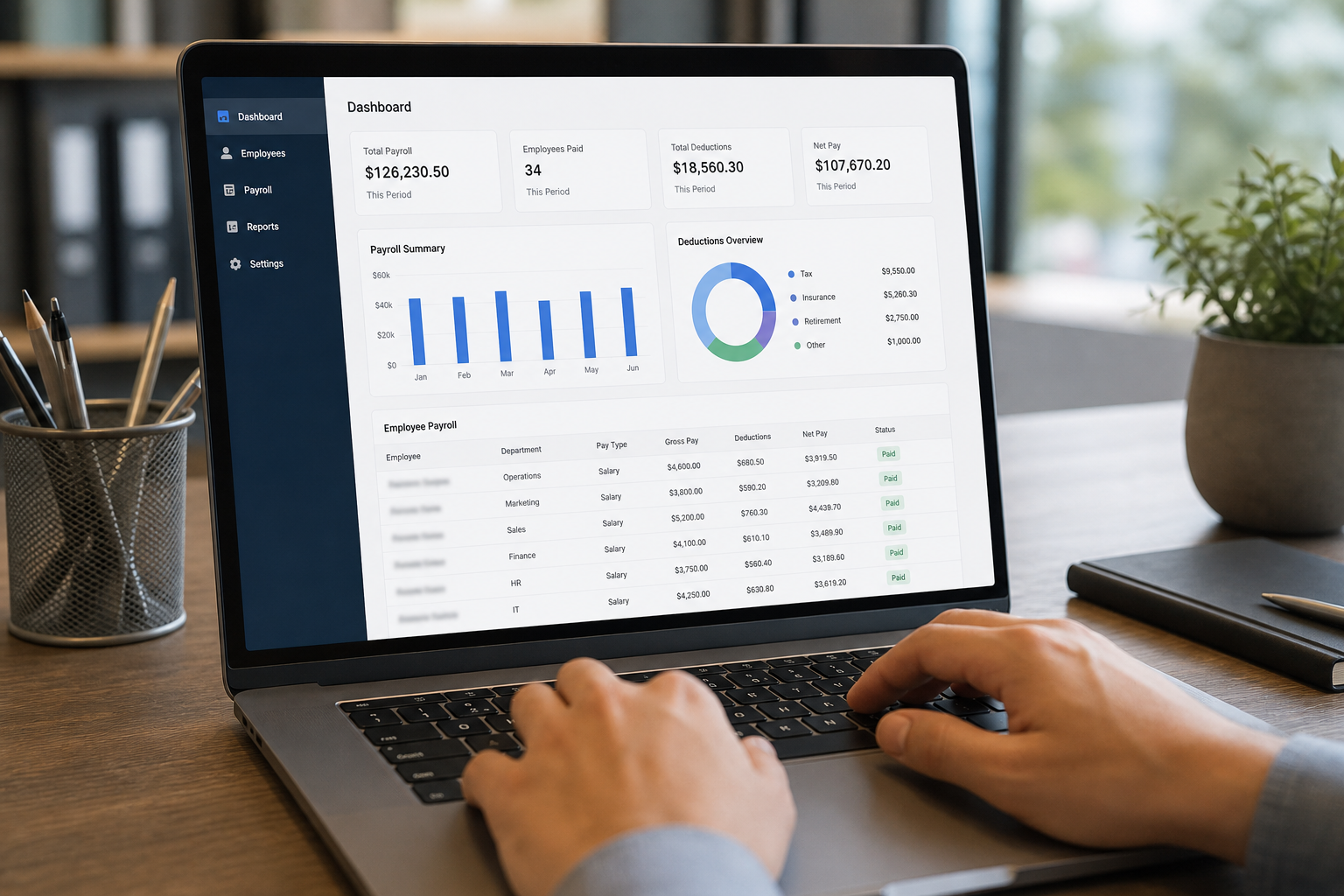
A dedicated payroll platform keeps direct deposits and tax filings running on schedule.
Step-by-Step: Setting Up Payroll Support for Your Minnesota Business
Switching to, or starting, payroll support does not need to be complicated. Below is the process most Minnesota businesses follow when setting up ongoing payroll support.
- Gather business and employee records. Collect your EIN, Minnesota tax ID, employee W-4 and I-9 forms, pay rates and banking details before contacting any payroll provider.
- Choose a Minnesota-based payroll partner. Select a provider with direct experience in Minnesota and Wisconsin tax rules rather than a generic national platform with call-center support.
- Set up state and federal tax accounts. Register for Minnesota withholding and unemployment insurance accounts, then confirm your federal deposit schedule matches your tax liability.
- Run a parallel test payroll cycle. Process one payroll cycle alongside your old system or spreadsheet to confirm calculations, deductions and direct deposits all match correctly.
- Launch ongoing payroll and compliance monitoring. Move fully onto the new system, then schedule regular check-ins to review tax filings, new hires and any changes in Minnesota payroll regulations.
Minnesota Payroll Support for DHS-Licensed Providers
Minnesota DHS-licensed providers, including 245D HCBS, 245A, home care, PCA and waivered services programs, face payroll requirements that go beyond a standard paycheck run. Specifically, payroll and staffing records often need to line up with DWRS rate documentation, reevaluation submissions and NETStudy 2.0 background study compliance for every employee.
As a result, these providers benefit from a payroll and bookkeeping partner who already understands Minnesota Department of Human Services requirements rather than one learning the rules from scratch. For a closer look at the accounting side of this niche, this guide for Minnesota waivered service providers covers reporting and licensing details in depth. Business owners newer to the Minneapolis market may also find this accounting guide for immigrant entrepreneurs in Minneapolis useful for understanding local compliance basics before payroll even begins.

DHS-licensed providers often need payroll records that align with licensing and rate documentation.
Choosing the Right Minnesota Payroll Processing Partner
When comparing providers, look past the base price and consider who actually answers the phone when something goes wrong. Direct access to the person managing your payroll, rather than a ticket queue, tends to matter most during tax season or a compliance deadline.
Furthermore, ask how a provider handles corrections, year-end filings and transitions if a payroll system ever shuts down. You can learn more about HAR Financial Services' approach to ongoing bookkeeping and payroll support by visiting haraccounting.com, where current clients can also book a free consultation before committing to anything.
Frequently Asked Questions About Minnesota Payroll Support Services
What are Minnesota payroll support services?
Minnesota payroll support services are professional services that handle paycheck processing, tax withholding, direct deposit and compliance filings for employers based in Minnesota. They typically include federal and state tax deposits, new-hire reporting and year-end forms like W-2s.
How much does payroll support cost in Minnesota?
Costs vary by provider, employee count and complexity, but most small Minnesota businesses pay a base monthly fee plus a per-employee charge. Bundling payroll with bookkeeping often lowers the combined cost compared to separate vendors.
Why do Minnesota businesses outsource payroll instead of running it in-house?
Outsourcing reduces the risk of missed tax deadlines, incorrect withholding and compliance errors that carry IRS and state penalties. It also frees up the owner's time to focus on operations instead of tax tables and filing deadlines.
What taxes do Minnesota employers need to withhold?
Minnesota employers generally withhold federal income tax, Social Security, Medicare, and Minnesota state income tax, in addition to paying unemployment insurance contributions. The Minnesota Department of Revenue sets the deposit schedule based on total tax liability.
How is Minnesota payroll different from payroll in other states?
Minnesota has its own state withholding tables, unemployment insurance rates and sick-and-safe-time requirements that differ from neighboring states like Wisconsin. A provider working across both states needs to track two separate sets of rules correctly.
What is the biggest mistake businesses make with Minnesota payroll?
The most common mistake is misclassifying workers as independent contractors when they meet the legal definition of an employee. This exposes the business to back taxes, penalties and potential state audits.
How long does it take to switch payroll support providers?
A typical transition takes two to four weeks, depending on how much historical data needs to move and whether a parallel test run is used. Switching between quarters, rather than mid-quarter, usually simplifies the process.
Can Minnesota payroll support services handle multi-state employees?
Yes, a provider with Minnesota and Wisconsin experience can manage employees who live in one state and work in another, applying the correct reciprocity and withholding rules. This is common for businesses near the Minnesota-Wisconsin border.
Do Minnesota DHS-licensed providers need specialized payroll support?
Yes, 245D and home care providers often need payroll tied to cost reports, DWRS rate documentation and background study compliance under NETStudy 2.0. A generalist payroll vendor usually isn't familiar with these requirements.
What happens if a Minnesota payroll processor shuts down unexpectedly?
Businesses need a rapid migration plan to a new processor so payroll runs and tax deposits aren't interrupted. Experienced firms can move hundreds of employees to a new platform without a missed payroll or a compliance gap.
What is the best way to choose a Minnesota payroll support provider?
Look for direct access to the person running your payroll, Minnesota-specific tax knowledge, and transparent pricing without hidden fees. Ask how they handle corrections, year-end filings and support during tax season.
Can payroll support services help with new employee setup?
Yes, most providers handle new-hire reporting to the state, I-9 and W-4 collection, and setup of direct deposit and withholding elections. This keeps the business compliant from an employee's very first paycheck.
For businesses still weighing their options, the guide to picking the right Minnesota payroll company is a practical next read before making a final decision.
Final Thoughts on Minnesota Payroll Support Services
In the end, Minnesota payroll support services exist to remove one of the most error-prone parts of running a business: getting people paid correctly, on time, and in line with state and federal rules. Whether a business runs a small retail shop, a growing service company, or a DHS-licensed care program, the right payroll partner should offer direct access, local tax knowledge and a track record of handling problems without disrupting a single paycheck. For Minnesota and Wisconsin businesses ready to simplify payroll, booking a free consultation is typically the fastest way to see what dependable Minnesota payroll support services actually look like in practice.