

Minnesota Tax Return Preparation: A Business Owner Guide
Minnesota tax return preparation is the process of turning a year of financial records into accurate federal and Minnesota returns, filed on time. For business owners, it reaches well beyond one form. It includes entity returns, payroll tax reconciliation, estimated payments and the records that back every number. This guide explains how the process works and where businesses most often go wrong.
Quick answer: Good returns start with reconciled books, matching payroll records and a clear view of your entity type. File the federal return first, then Minnesota, and confirm every due date with the IRS and Minnesota Department of Revenue.
An accountant and business owner review year-end records during Minnesota tax return preparation.
What Is Minnesota Tax Return Preparation?
It is the work of collecting records, calculating taxable income and filing the returns your business owes to the IRS and the State of Minnesota. Minnesota returns generally build on federal figures, so errors in one place tend to carry into the other.
For a business, the return type depends on how it is taxed. A sole proprietorship, partnership, S corporation and C corporation each file differently. Therefore, confirming your entity type is the first decision, not the last.
Key Deadlines and Where to Verify Them
Due dates differ by entity type and tax year. They can also move when a date falls on a weekend or holiday. For that reason, check the official calendars rather than relying on memory.
Federal dates: the Internal Revenue Service publishes filing and estimated payment calendars.
Minnesota dates: the Minnesota Department of Revenue lists state due dates and payment options.
Extensions: an extension generally moves the filing date, not the date payment is due.
Documents to Gather Before You File
Complete records prevent most delays. In particular, gather the following before any return is started:
Reconciled profit and loss statement and balance sheet
Payroll reports, quarterly filings, Forms W-2 and 1099
Loan statements and asset purchase records
Proof of estimated payments already made
Prior-year returns
Steps to Prepare a Business Return
Confirm your entity type. It decides which federal and Minnesota returns apply.
Reconcile your books. Match every bank, card and loan account through year end.
Gather payroll and contractor records. Wages and 1099 payments must agree with what you reported during the year.
Review deductions and credits. Support each one with a receipt, invoice or other record.
File and keep records. Submit by the due dates, pay any balance and store complete copies.
Common Mistakes That Complicate Filing
Most problems start months before filing. Unreconciled books lead to guessed numbers. Payroll totals that differ from quarterly filings invite notices. Missed estimated payments create penalties and interest.
In contrast, businesses that keep clean monthly books usually reach filing season with few surprises. Our guide to Minnesota tax planning services for businesses covers how to spread that work across the year.
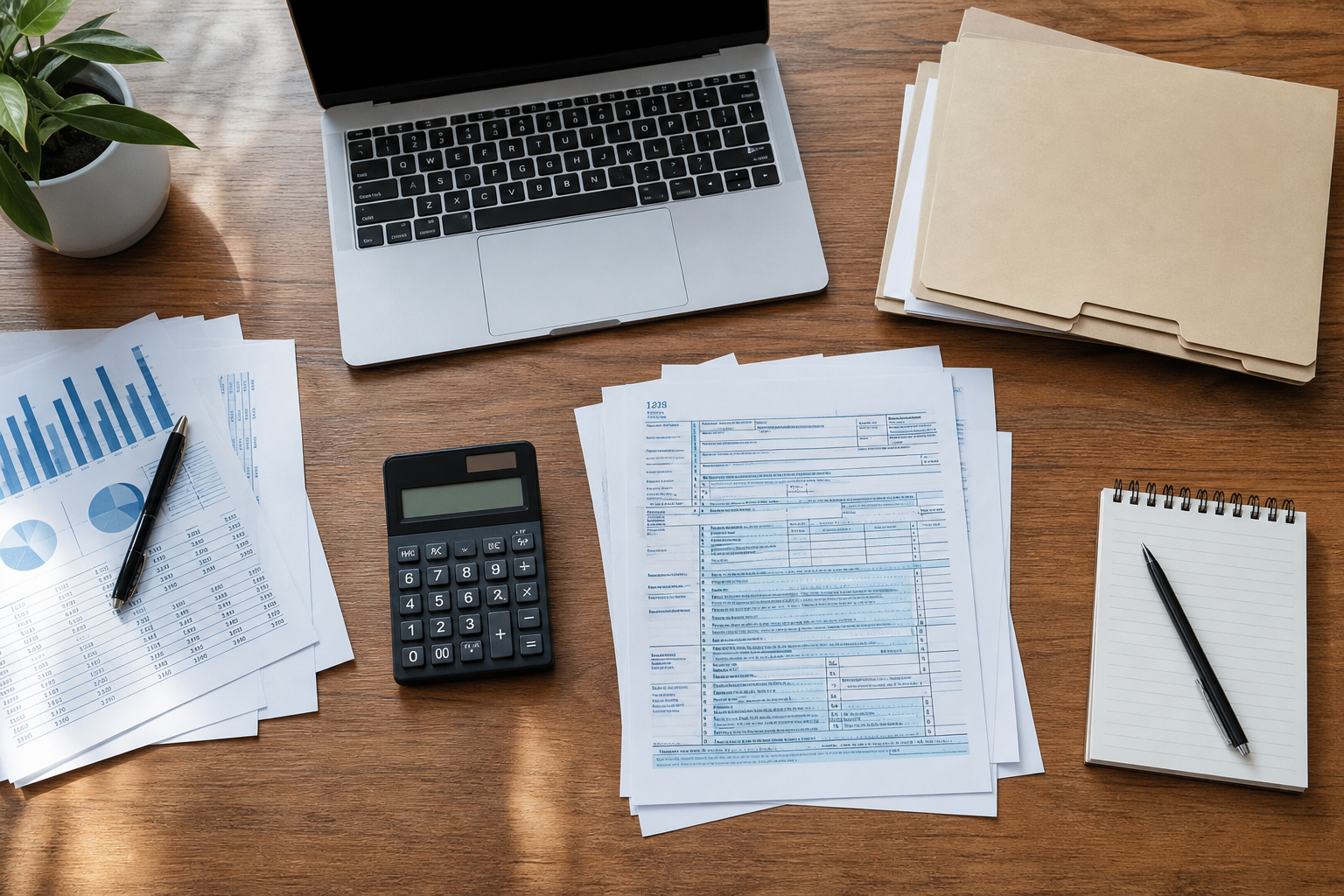
Organized records make Minnesota tax return preparation faster and more accurate.
When to Hire a Professional Tax Preparer
Simple returns can be self-prepared. However, businesses with employees, several entities, multiple locations or complex payroll usually gain from professional help. Rules also change, and an error on a business return can be costly to correct.
HAR Financial Services is a Minneapolis-based bookkeeping, payroll and tax accounting firm serving businesses across Minnesota and Wisconsin. It was founded in 2006, is an IRS Authorized E-File Provider and is a member of NATP. See HAR's tax preparation and planning services or the Minneapolis tax preparation guide for businesses for more detail.
Tax Filing for DHS-Licensed Providers
DHS-licensed providers face added demands. Their books, payroll and cost reporting should support both the tax return and Minnesota DHS requirements. As a result, one set of clean records serves several purposes. Read more in tax preparation and compliance for Minnesota DHS providers. For broader filing background, see this Minnesota business tax filing guide.
Frequently Asked Questions
What is Minnesota tax return preparation?
Minnesota tax return preparation is the process of gathering financial records, calculating taxable income and filing the federal and Minnesota returns your business or household owes. For businesses, it also covers entity-level returns, payroll tax reconciliation and estimated payments.
Who must file a Minnesota tax return?
Filing requirements depend on income, residency and entity type. The Minnesota Department of Revenue publishes the current thresholds, so confirm them there or with a tax professional.
When are Minnesota business tax returns due?
Due dates vary by entity type and tax year, and they can shift when a date falls on a weekend or holiday. Check the IRS and Minnesota Department of Revenue calendars for the exact date that applies to you.
What documents do I need to prepare a business return?
You typically need reconciled financial statements, payroll reports, Forms 1099, loan statements, asset purchase records and proof of estimated payments. Prior-year returns also help.
Do I file a federal return before a Minnesota return?
In practice, yes. Minnesota returns generally start from federal figures, so the federal return is usually completed first.
What happens if I file late?
Late filing or late payment can lead to penalties and interest. Extensions can move the filing date but generally do not extend the time to pay.
Should I prepare my own return or hire a professional?
Simple returns can be self-prepared. Businesses with employees, multiple entities, multiple locations or licensing requirements usually benefit from professional preparation.
How do quarterly estimated payments work?
Business owners who expect to owe tax pay it in installments during the year instead of one lump sum. The IRS and Minnesota Department of Revenue publish the schedules and safe harbor rules.
How early should I start preparing my return?
Start planning during the year and begin return preparation as soon as year-end books are reconciled. Early work leaves time to fix errors before a deadline.
What are common mistakes in Minnesota tax return preparation?
Common mistakes include unreconciled books, mismatched payroll figures, missing 1099s, misclassified expenses and missed estimated payments. Most trace back to weak bookkeeping during the year.
Can HAR help with Minnesota tax return preparation?
Yes. HAR Financial Services provides tax preparation and planning for businesses in Minnesota and Wisconsin, alongside bookkeeping and payroll. You can book a free consultation to discuss your situation.
Does tax preparation differ for DHS-licensed providers?
Often, yes. Providers must align their books, payroll and cost reporting with Minnesota DHS expectations, so the return should rely on records that also support those requirements.
Conclusion
Accurate Minnesota tax return preparation depends on three things: reconciled books, matching payroll records and deadlines verified with official sources. Starting early and planning through the year removes most filing-season stress. To talk through your return with a team that knows Minnesota businesses, book a free consultation with HAR Financial Services. HAR does not charge until after the first consultation.
This article is general information, not tax, legal or accounting advice for your specific situation. Talk to HAR Financial Services about your business.