SBA loan accounting support is what turns a stack of bank statements and spreadsheets into the financial package an SBA lender will actually approve. For many Minneapolis and Wisconsin business owners, this kind of support means working with a bookkeeper or accountant who understands exactly what SBA 7(a) and SBA 504 underwriters expect to see. Indeed, most SBA loan denials trace back not to a weak business idea, but to disorganized books, missed reconciliations, or financial statements that do not match tax returns. Consequently, lining up accounting support before you apply can be the difference between a fast approval and a frustrating rejection letter.
Direct answer: SBA loan accounting support includes bookkeeping cleanup, cash flow forecasts, and financial statements formatted to match SBA and lender requirements. It typically also covers tax return reconciliation, debt schedules, and ongoing reporting once the loan closes.

Preparing lender-ready financials is the core of SBA loan accounting support.
What Is SBA Loan Accounting Support?
SBA loan accounting support is the professional bookkeeping and financial reporting work that prepares a business's records for an SBA-backed loan application. In short, it answers the lender's core question: can this business repay the loan on schedule? That requires clean books, accurate statements, and projections that hold up under scrutiny.
Beyond basic bookkeeping, this support usually includes reconciling months of transactions, matching financial statements to filed tax returns, and preparing a personal financial statement for each owner. For example, a lender reviewing a 7(a) loan application will want to see at least two to three years of consistent, reconciled financial history. Without it, the underwriting process stalls or the file gets declined outright.
Why Lenders Scrutinize Your Financial Records Before Approving a Loan
Lenders scrutinize financial records because the SBA guarantee does not remove risk entirely from the bank's side. Specifically, the U.S. Small Business Administration typically guarantees up to 85% of 7(a) loans valued at $150,000 or less, and up to 75% on larger loans, which means the lending bank still carries real exposure on every file.
As a result, underwriters look closely at a business's debt service coverage ratio, which measures available cash flow against total debt payments. Most lenders want this ratio at 1.15 or higher. In contrast, a business with inconsistent bookkeeping cannot prove its real cash flow, so the application sits in limbo or gets denied regardless of how strong the underlying business actually is.
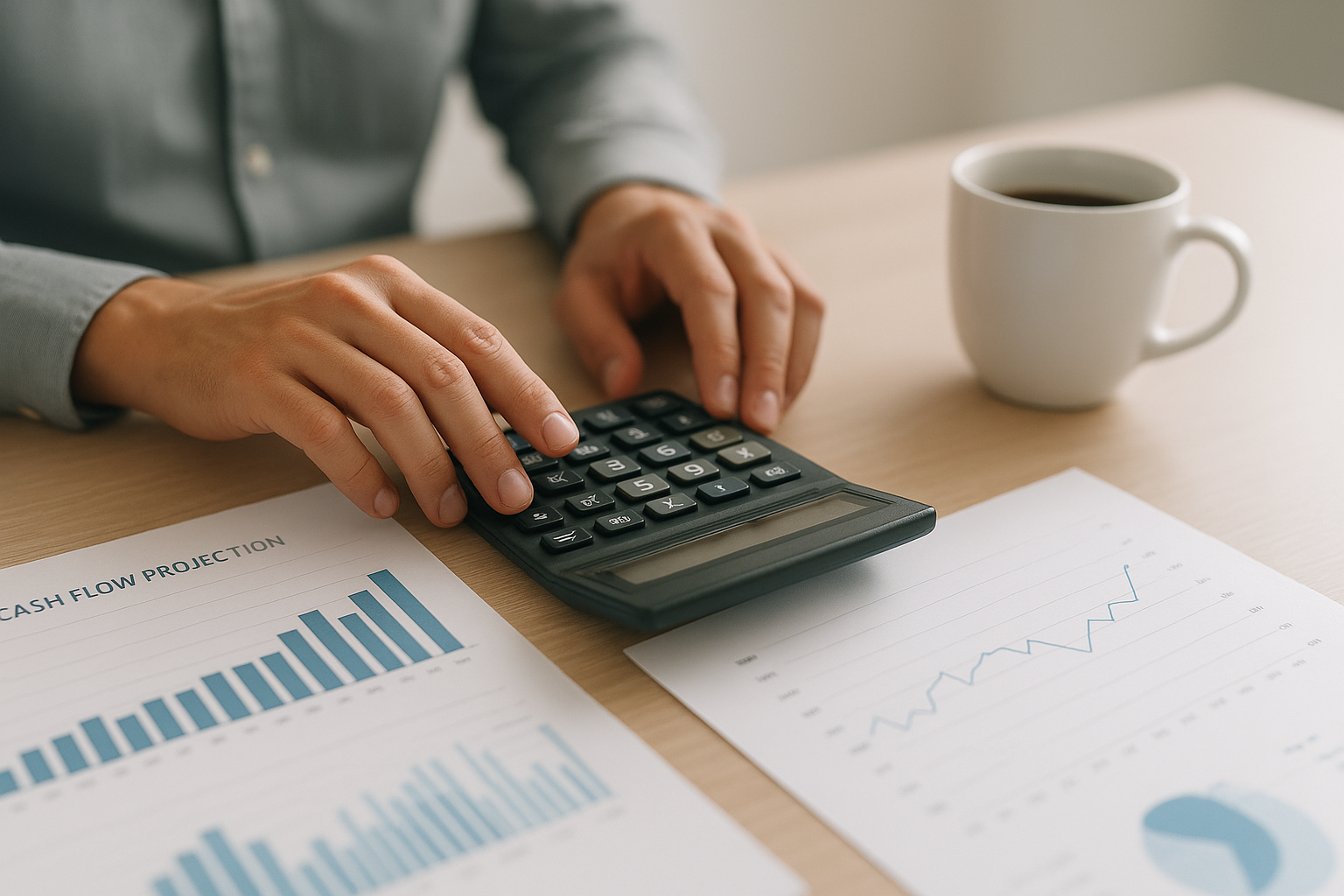
Cash flow projections are one of the most heavily reviewed pieces of an SBA loan file.
What SBA Loan Documentation and Bookkeeping Must Cover
A complete SBA loan file generally includes several interlocking pieces, and missing any one of them can delay underwriting. Therefore, most applicants need the following prepared before submission:
- Reconciled profit and loss statements and balance sheets for at least two to three years
- Business and personal tax returns that match the financial statements exactly
- A current debt schedule listing all existing business loans and obligations
- A personal financial statement for every owner with 20% or more equity
- 12 to 24 month cash flow projections supporting repayment ability
Similarly, businesses in regulated industries, such as Minnesota's 245D HCBS and home care providers, often need DHS cost reporting layered on top of standard SBA documentation. A firm already familiar with both saves significant back-and-forth with underwriters.
Step-by-Step: Preparing Your Books for an SBA Loan Application
Getting financially ready for an SBA loan is a sequential process. Below is the order most accounting teams follow:
- Catch up and reconcile your bookkeeping. Reconcile every bank and credit card account, categorize outstanding transactions, and close out any months that were never finalized so your ledger matches real account balances.
- Reconcile financial statements with tax returns. Compare your profit and loss statement and balance sheet against your most recent business tax returns to confirm the numbers line up, since lenders flag mismatches immediately.
- Build 12 to 24 month cash flow projections. Create forward-looking cash flow projections that show how the business will generate enough income to cover the new loan payment along with existing obligations.
- Prepare a personal financial statement and debt schedule. List all owner assets, liabilities, and existing business debts in the format SBA lenders require, since incomplete schedules are a frequent cause of processing delays.
- Package everything into lender-ready reports. Assemble reconciled statements, projections, and schedules into one organized package so the underwriter can review your file quickly without requesting missing documents.
Common Mistakes That Delay SBA Loan Approval
Even strong businesses run into avoidable delays. Above all, the most frequent mistake is applying before reconciling the books, which causes financial statements to disagree with filed tax returns. Furthermore, owners often underestimate how detailed cash flow projections need to be, submitting rough estimates instead of month-by-month forecasts tied to real historical trends.
In addition, many applicants forget to disclose all existing business debt on their debt schedule, which underwriters discover anyway through credit pulls. This inconsistency damages trust with the lender and can restart the entire review. Therefore, working through the documentation checklist with an accountant before submission, rather than during underwriting, consistently produces faster outcomes.
How HAR Financial Services Helps Minnesota Businesses With SBA Loan Prep
HAR Financial Services has worked with Minneapolis and Wisconsin business owners since 2006, and the firm's grant and loan application services cover full SBA and community lender package preparation, not just a one-time tax cleanup. The team has secured more than $1,000,000 for clients in grants and loans, and clients work directly with the same bookkeeper or accountant throughout the process, as explained on the HAR difference page.
For businesses that outgrow basic bookkeeping, HAR's fractional CFO advisory builds ongoing cash flow forecasting and KPI tracking, which lenders increasingly expect for larger loan amounts. Minnesota DHS-licensed providers, meanwhile, often need accounting that satisfies both SBA underwriting and DHS cost reporting at once; HAR's guidance on choosing the right accounting firm for DHS providers walks through that overlap in detail. You can review the full range of services, including the current free consultation offer, at haraccounting.com.

Working face-to-face with the same accountant keeps SBA loan prep moving quickly.
Frequently Asked Questions About SBA Loan Accounting Support
What is SBA loan accounting support?
SBA loan accounting support is the bookkeeping, financial statement preparation, and cash flow forecasting work that gets a business ready for SBA-backed financing. It covers everything a lender's underwriter needs to verify repayment ability, from reconciled books to projections.
How long does it take to prepare financials for an SBA loan?
Preparation usually takes two to six weeks, depending on how current the books already are. Businesses with months of unreconciled transactions need catch-up bookkeeping first, which can add several additional weeks.
How much does SBA loan accounting support cost?
Costs vary based on how much cleanup work is required, but most firms price it into a monthly bookkeeping engagement rather than charging a flat one-time fee. Some firms, including HAR Financial Services, offer free catch-up bookkeeping as part of onboarding.
What financial documents do SBA lenders require?
SBA lenders typically require profit and loss statements, balance sheets, tax returns, a debt schedule, and a personal financial statement from each owner. Many lenders also request 12 to 24 months of cash flow projections.
Can I apply for an SBA loan with messy or incomplete books?
Technically yes, but it is rarely a good idea. Messy books almost always slow down underwriting or trigger a denial, so most applicants benefit from a bookkeeping catch-up before submitting an application.
What is the difference between SBA 7(a) and SBA 504 loan accounting needs?
SBA 7(a) loans focus heavily on overall cash flow and working capital history, while SBA 504 loans, used for real estate and equipment, require detailed project cost documentation alongside standard financials. Both still require reconciled books and tax-matched statements.
Do I need a CPA for an SBA loan application?
A CPA is not legally required, but a bookkeeper or accountant familiar with SBA underwriting standards significantly improves approval odds. Firms with IRS e-file authorization and bookkeeping association membership typically already understand the required format.
What debt service coverage ratio do SBA lenders want to see?
Most SBA lenders look for a debt service coverage ratio of at least 1.15 to 1.25, meaning the business generates 15% to 25% more cash flow than its total debt payments. A lower ratio often leads to a declined application or a request for a co-signer.
How does catch-up bookkeeping help an SBA loan application?
Catch-up bookkeeping reconciles months or years of unrecorded transactions so your financial statements actually match your bank accounts and tax returns. Lenders cross-check these documents, and any mismatch can delay or sink an application.
What happens after my SBA loan is approved?
Most SBA loans come with ongoing reporting covenants, such as annual financial statement submissions or periodic compliance checks. Ongoing accounting support helps businesses meet these requirements without scrambling each year.
Can accounting support help SBA loan applications for Minnesota DHS-licensed providers?
Yes. DHS-licensed providers, including 245D HCBS and home care agencies, often need accounting that also satisfies DHS cost reporting and DWRS rate requirements alongside standard SBA underwriting. A firm familiar with both reduces duplicate work.
What is the biggest mistake businesses make when applying for an SBA loan?
The most common mistake is applying before the books are reconciled, which causes financial statements to disagree with tax filings. This single issue causes more delays than almost any other underwriting problem.
Final Thoughts on Getting Loan-Ready
In summary, SBA loan accounting support is not a last-minute formality; it is the groundwork that determines whether an application moves quickly or stalls in underwriting. Reconciled books, tax-matched statements, realistic cash flow projections, and a complete debt schedule give lenders the confidence they need to approve funding. Above all, businesses that build this foundation before applying, rather than during the review, consistently see faster decisions and fewer requests for missing documents. Whether you are a growing Minneapolis business, a DHS-licensed provider, or an entrepreneur applying for your first SBA loan, getting experienced accounting support in place early is one of the most practical steps toward a successful approval.