Minnesota DHS accounting services help licensed providers keep their books, payroll and compliance documentation aligned with state requirements. For 245D HCBS, 245A, home care, PCA and waivered service providers, a single bookkeeping error can jeopardize a license or trigger a corrective action plan. Therefore, many Minnesota providers look for an accounting partner that understands both standard bookkeeping and the Minnesota Department of Human Services (DHS) rules that govern their business. HAR Financial Services, a Minneapolis-based firm founded in 2006, has built its practice around exactly this niche.
Quick answer: Minnesota DHS accounting services combine standard bookkeeping, payroll and tax work with DHS-specific compliance tasks — DWRS rate audits, reevaluations, NETStudy 2.0 background study tracking, and 245D or 245A licensing documentation. Providers who use a specialized accountant generally face fewer corrective action plans and pass reevaluations with less last-minute scrambling.
What Are Minnesota DHS Accounting Services?
Minnesota DHS accounting services are bookkeeping, payroll and compliance services built specifically for providers licensed under the Minnesota Department of Human Services. In practice, this means an accountant who understands 245D HCBS licensing, 245A home care and residential licensing, PCA Choice agreements, and waivered services funding — not just general small business tax rules.
Unlike a generic bookkeeper, a firm offering Minnesota DHS accounting services tracks revenue and cost by licensed program, prepares documentation for DWRS rate audits, and keeps payroll records clean enough to survive a reevaluation. As a result, providers spend less time scrambling before a DHS deadline and more time running their program.

Reviewing reconciled financials is the foundation of strong Minnesota DHS accounting services.
Why DHS-Licensed Providers Need Specialized Accounting Support
Minnesota DHS providers face layers of oversight that most small businesses never deal with. In addition to filing taxes and running payroll, they must document costs in a way that satisfies licensing reviewers, cost report auditors, and sometimes lenders all at once. Consequently, a bookkeeping error that would be a minor annoyance for a retail shop can become a compliance problem for a DHS provider.
245D HCBS and Waivered Service Providers
245D providers deliver home and community-based services funded through Medicaid waivers. Specifically, these providers must separate staffing costs, documentation hours, and service delivery data in a way that supports DWRS rate submissions. For background on how Medicaid waiver programs work nationally, the Medicaid waiver overview on Wikipedia provides useful context.
245A Licensed Providers and Home Care Agencies
245A licensing covers a broader set of residential and home care programs. Similarly, these providers need payroll and expense records that hold up during licensing reviews and NETStudy 2.0 background study audits. HAR Financial Services' healthcare accounting services for DHS providers are built around exactly this requirement.
Core Minnesota DHS Accounting Services Offered
A full-service Minnesota DHS accounting partner typically covers several connected areas rather than a single task. Above all, the goal is one team that understands both the numbers and the licensing rules behind them.
- Monthly bookkeeping and catch-up work — reconciled, lender-ready books, including free catch-up bookkeeping for records that are months behind.
- Payroll processing — direct deposit, withholding and payroll tax filings through a dedicated platform such as HARpay, which currently runs payroll for 240 active clients.
- DHS licensing and compliance support — policy development, corrective action plan response, and DHS provider support services for day-to-day licensing questions.
- Tax preparation and planning — year-round planning rather than a once-a-year filing, covering entity decisions and quarterly estimates.
- Grant and SBA loan applications — full application management and post-award compliance reporting.
DWRS Rate Audits, Reevaluations and NETStudy 2.0 Compliance
For 245D providers, the Disability Waiver Rate System (DWRS) sets reimbursement rates based on reported costs, staffing ratios and service hours. If the underlying bookkeeping is inaccurate, the resulting rate can be too low — or worse, trigger an audit finding. Therefore, DWRS rate audits and appeals require an accountant who can trace every number back to source documentation.
Reevaluations work similarly. Specifically, the Minnesota Department of Human Services periodically reviews a provider's compliance posture, and financial records are part of that review. In contrast to a one-time tax filer, a DHS provider benefits from year-round recordkeeping that is always "reevaluation ready." For official program details, see the Minnesota Department of Human Services website.
NETStudy 2.0 background studies add another layer: new hires generally cannot work unsupervised until their study clears. As a result, payroll start dates, onboarding costs and compliance tracking all have to line up. HAR's guide on DHS licensing support Minnesota providers can trust walks through this process in more detail, as does the firm's dedicated piece on 245D services and DHS compliance support in Minneapolis.

Accurate payroll and background study tracking support smooth DHS reevaluations.
How to Start with Minnesota DHS Accounting Services
Switching accountants can feel risky for a licensed provider, but above all, a structured process keeps payroll and compliance uninterrupted. Here is a typical path:
- Book a free consultation. Schedule a free consultation so the accounting team can review your current books, payroll setup and which DHS licenses apply to your business.
- Complete catch-up bookkeeping. Work through free catch-up bookkeeping to reconcile bank accounts, categorize past expenses, and bring records current before ongoing monthly service begins.
- Set up ongoing bookkeeping and payroll. Move onto a monthly bookkeeping and payroll platform that tracks revenue and costs separately for each licensed program and runs payroll on a fixed schedule.
- Build DHS compliance tracking. Add tracking for DWRS rate components, NETStudy 2.0 background study status, and reevaluation deadlines so documentation is ready before DHS asks for it.
- Review financials and licensing position regularly. Meet with your accountant on a recurring basis to review reports, DWRS audit readiness, and any corrective action plan items before they become urgent.
HAR Financial Services' experience migrating payroll shows how smoothly a transition can go: when payroll processor Kotapay shut down, the firm moved all 240 payroll clients to NatPay with zero missed payrolls and zero compliance gaps. That same process-driven approach applies to onboarding new DHS provider clients.
Choosing a Minnesota DHS Accounting Partner
Not every accounting firm is set up to handle DHS compliance work, so it helps to ask direct questions before signing on. For example, how many 245D or 245A clients does the firm currently serve? Does the team handle DWRS appeals directly, or outsource them?
HAR Financial Services has served Minnesota and Wisconsin businesses since 2006 and now supports more than 600 clients, including 240 on active payroll. The firm is a BBB-accredited, IRS Authorized E-File Provider, and holds membership in both the American Institute of Professional Bookkeepers (AIPB) and the National Association of Tax Professionals (NATP). Clients work directly in person at the firm's renovated Minneapolis office — there is no call center or rotating contact. For more on how the firm supports home care businesses specifically, see this guide on home care business accounting services for MN providers.
Beyond bookkeeping, HAR has secured more than $1,000,000 in grants and loans for clients, giving providers a sense of scale behind the firm's grant and loan application support. Providers interested in this specific combination of licensing knowledge and financial services can review the full DHS provider support services page or visit HAR Financial Services directly to book a free consultation.
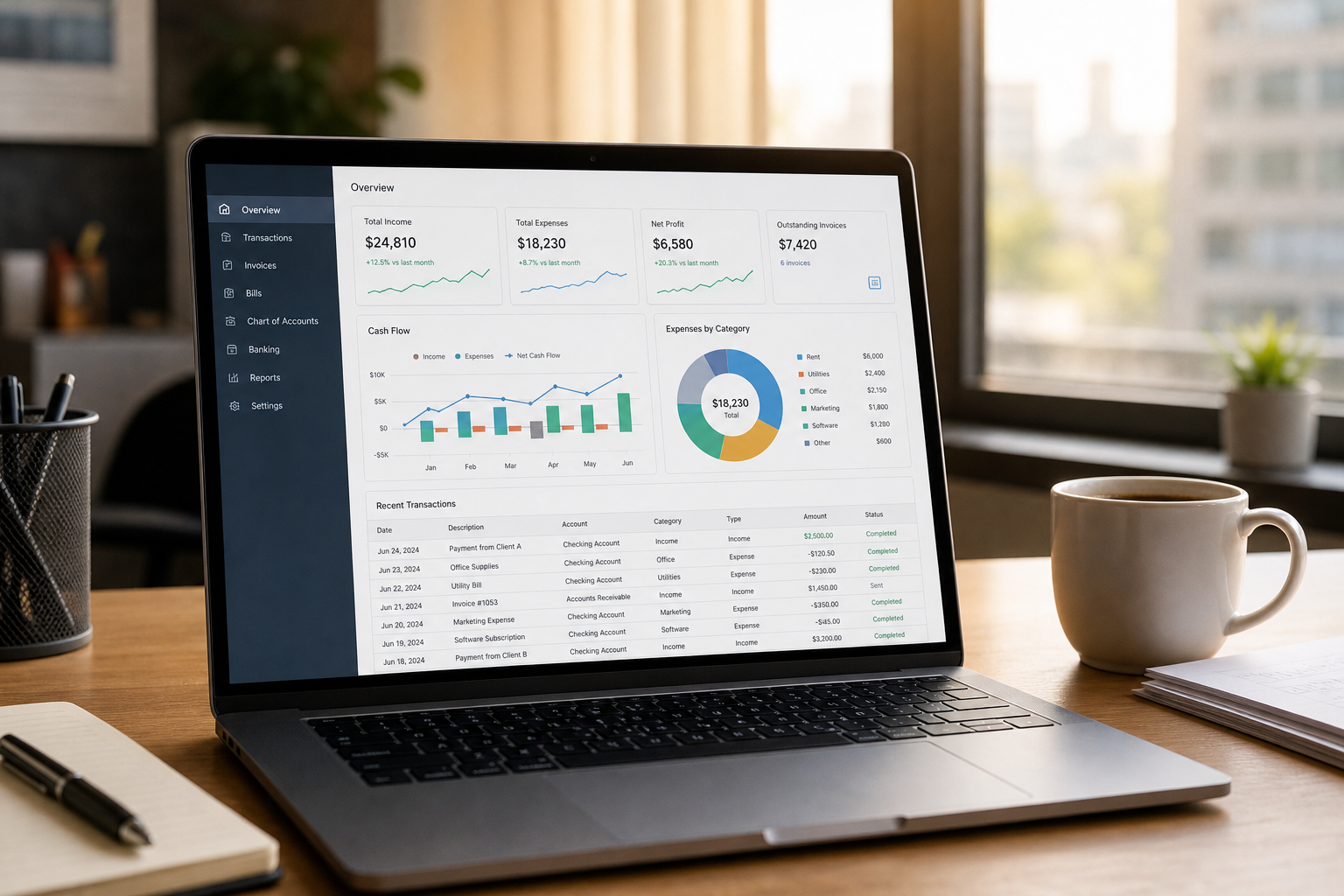
Clean, program-level financial reporting supports audits, reevaluations and lender requests alike.
Frequently Asked Questions About Minnesota DHS Accounting Services
What are Minnesota DHS accounting services?
Minnesota DHS accounting services are bookkeeping, payroll and compliance support built for providers licensed by the Minnesota Department of Human Services, including 245D HCBS, 245A, home care, PCA and waivered services providers. They combine standard financial recordkeeping with DHS-specific tasks like DWRS rate audits and reevaluation prep.
How much do Minnesota DHS accounting services cost?
Pricing usually depends on payroll headcount, the number of licensed programs and how far behind the books are. Most firms, including HAR Financial Services, quote a monthly flat fee after a free consultation rather than billing by the hour.
How long does it take to catch up a DHS provider's books?
Catch-up bookkeeping for a single licensed program typically takes two to six weeks, depending on how many months of records need reconciliation. Providers with multiple DHS licenses or missing bank statements may need longer.
What is a DWRS rate audit?
A DWRS rate audit reviews the Disability Waiver Rate System data a provider submitted to confirm the reimbursement rate matches actual costs, staffing ratios and service hours. Errors in this submission can lower a provider's rate or trigger an appeal process.
Why do 245D providers need specialized accounting support?
245D providers must document costs in a way that satisfies both standard accounting rules and DHS licensing reviewers. A generalist bookkeeper who does not track DWRS components, background study costs and program-specific revenue correctly can put a license at risk.
What is the difference between general bookkeeping and DHS compliance accounting?
General bookkeeping records income and expenses for tax purposes. DHS compliance accounting adds licensing-specific reporting, cost allocation by program, and documentation that holds up during reevaluations, cost report audits and corrective action plan reviews.
What common mistakes do DHS providers make with their books?
Common mistakes include mixing personal and business expenses, failing to separate costs by licensed program, and missing payroll tax deposits for PCA or home care staff. These errors often surface during a reevaluation or DWRS audit, not before.
How does NETStudy 2.0 affect accounting and payroll?
NETStudy 2.0 background studies must be cleared before a new hire can work unsupervised, which affects payroll start dates and onboarding costs. Accurate tracking of study status prevents payroll errors and licensing violations.
Can Minnesota DHS accounting services help with grant applications?
Yes. Firms that handle Minnesota DHS accounting services often also manage SBA, community lender and grant applications, since reviewers and lenders require the same reconciled, program-level financial data used in DHS filings.
What should I look for in a Minnesota DHS accounting partner?
Look for direct experience with 245D, 245A or home care licensing, a track record with DWRS audits and reevaluations, in-house payroll capability, and a named contact instead of a rotating support queue.
Do DHS accounting services cover payroll for PCA and home care staff?
Yes, payroll is usually bundled with DHS accounting support because PCA and home care staff often work variable hours across multiple clients. Accurate payroll processing also feeds directly into DWRS rate data.
How often should DHS providers reconcile their books?
Monthly reconciliation is the standard for licensed providers. Waiting longer increases the risk of errors going unnoticed until a reevaluation, cost report audit or corrective action plan deadline is already in motion.
What happens if a DHS provider fails a reevaluation?
A failed reevaluation can lead to a corrective action plan, a rate reduction, or in serious cases, licensing action. Clean, program-specific financial records make it easier to respond quickly and demonstrate compliance.
In summary, Minnesota DHS accounting services give 245D, 245A, home care, PCA and waivered service providers more than clean books — they provide a financial partner who understands DWRS audits, reevaluations and NETStudy 2.0 compliance from the inside. Consequently, providers who work with a specialized firm spend less time reacting to licensing surprises and more time running their programs. HAR Financial Services has supported Minnesota and Wisconsin DHS providers since 2006, and a free consultation is the simplest way to see whether its approach to Minnesota DHS accounting services fits your organization.