
Minnesota payroll tax compliance means correctly withholding, reporting, and remitting every state and federal payroll tax that applies to employees working in Minnesota, on time and in the right amount. For business owners across Minneapolis, greater Minnesota, and Wisconsin, getting this right protects cash flow, avoids costly IRS and Minnesota Department of Revenue penalties, and keeps payroll running without interruption. Consequently, this guide breaks down what compliance actually requires, where employers most often slip up, and how to build a system that keeps every filing on schedule.
Direct answer: Minnesota payroll tax compliance requires registering for federal and state tax accounts, withholding the correct income tax and Social Security/Medicare amounts, paying employer-side unemployment insurance and Paid Leave contributions, and filing every return by its exact federal and Minnesota deadline.
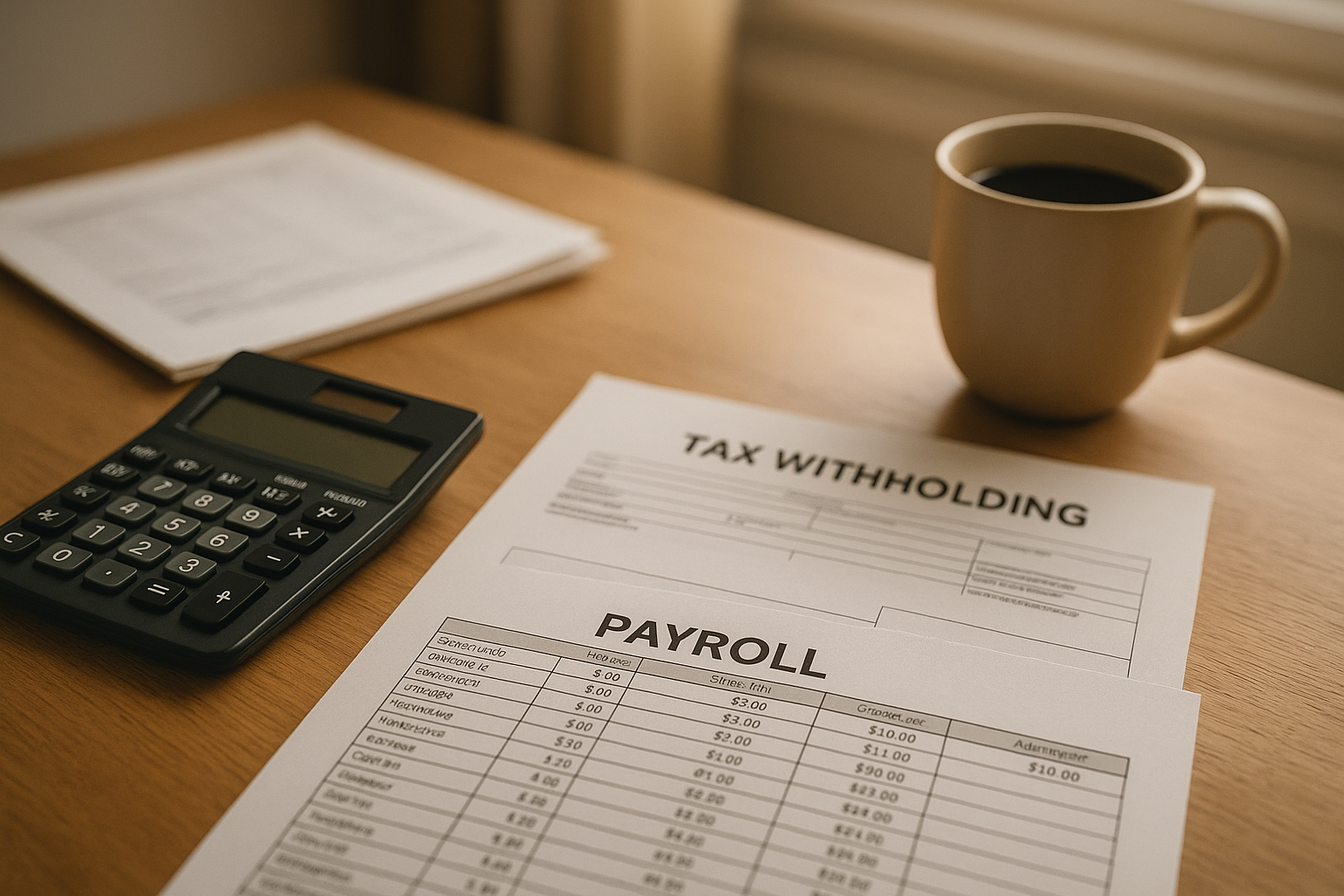
Careful recordkeeping is the foundation of Minnesota payroll tax compliance for growing businesses.
What Is Minnesota Payroll Tax Compliance?
Minnesota payroll tax compliance is the ongoing practice of withholding the right taxes from employee pay, paying employer-side taxes, and filing accurate returns with both the IRS and Minnesota Department of Revenue by their exact deadlines. In plain terms, it is the difference between "we processed payroll" and "we processed payroll correctly and legally."
In particular, compliance covers several layers at once: federal income tax withholding, Social Security and Medicare (together called FICA), federal unemployment tax, Minnesota state income tax withholding, Minnesota unemployment insurance, and, as of 2026, Minnesota's Paid Family and Medical Leave payroll contribution. Each layer has its own forms, deposit schedule, and penalty structure, which is exactly why so many small businesses fall behind without realizing it until a notice arrives.
Minnesota Payroll Tax Requirements Employers Need to Track
Every Minnesota employer, regardless of industry, must manage a core set of obligations. Below is the practical breakdown most bookkeeping teams use to stay organized.
- Federal income tax withholding based on each employee's W-4 elections.
- FICA taxes (Social Security and Medicare), split between employer and employee.
- Federal unemployment tax (FUTA), paid entirely by the employer.
- Minnesota state income tax withholding, filed with the Minnesota Department of Revenue.
- Minnesota unemployment insurance tax, an employer-paid tax with an experience-based rate.
- Minnesota Paid Leave contributions, active since January 2026 for most employers with employees in the state.
According to the Minnesota Department of Revenue, withholding tax accounts must file and deposit on a schedule assigned to each employer based on total withholding volume. Meanwhile, unemployment insurance is administered separately, so a single missed step in one system does not automatically flag the other, which is exactly how gaps go unnoticed for months.
Federal vs. Minnesota State Payroll Tax Obligations
Federal and state payroll taxes run on separate tracks, and understanding the split matters because each agency issues its own penalties. The IRS employment tax guidance covers FICA, FUTA, and federal withholding, while Minnesota handles state withholding, unemployment insurance through the Minnesota Unemployment Insurance program, and now Paid Leave.
Notably, the IRS can impose a trust fund recovery penalty equal to 100% of unpaid withheld taxes, and that liability can attach personally to owners and responsible employees, not just the business entity. As a result, treating payroll tax deposits as "the last bill to pay" is one of the riskiest habits a growing company can develop.
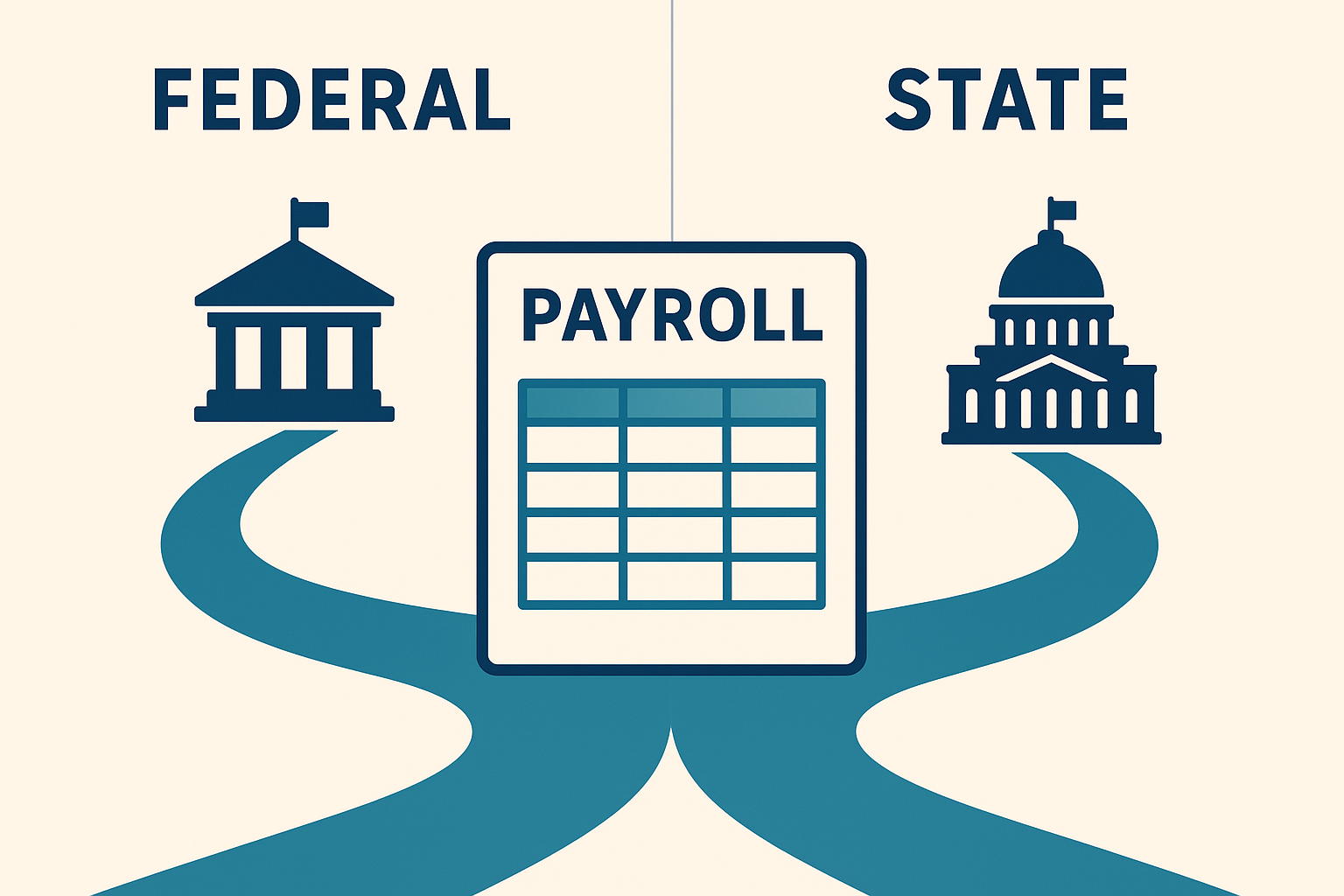
Federal and Minnesota payroll tax rules operate on separate schedules but both feed into the same payroll ledger.
Common Minnesota Payroll Compliance Mistakes
Most compliance failures are not intentional; they happen because payroll grows faster than the systems tracking it. The most frequent issues include:
- Misclassifying employees as independent contractors to avoid payroll tax, which the IRS and Minnesota both audit aggressively.
- Using outdated withholding tables after a mid-year tax law change.
- Missing a quarterly unemployment insurance filing because it is managed on a different login than withholding tax.
- Forgetting to register for Minnesota Paid Leave contributions after the January 2026 rollout.
- Switching payroll providers without confirming every filing transferred cleanly, which can create silent gaps.
On that last point, transitions are where compliance often breaks. For example, when the payroll processor Kotapay shut down, HAR Financial Services migrated all 240 of its payroll clients to NatPay with zero missed payrolls and zero compliance gaps, a result that came from having a dedicated team tracking every account, not a call center handling a queue of tickets.
How to Stay Compliant with Minnesota Payroll Tax Requirements
Building reliable Minnesota payroll tax compliance is a repeatable process rather than a one-time setup. Here is the sequence most accounting teams follow:
- Register for federal and state tax accounts. Obtain a federal Employer Identification Number from the IRS, then register with the Minnesota Department of Revenue for withholding tax and with the state unemployment insurance program before running your first payroll.
- Classify every worker correctly. Review each worker against IRS and Minnesota classification tests to confirm employee versus independent contractor status, since misclassification is one of the fastest ways to trigger back taxes and penalties.
- Set up accurate withholding for each employee. Collect completed W-4 and Minnesota withholding forms from every new hire and apply current federal and state withholding tables so the correct amount is deducted from each paycheck.
- File and deposit taxes on the required schedule. Follow your assigned federal deposit schedule and Minnesota quarterly filing calendar exactly, submitting withholding, unemployment insurance, and Paid Leave contributions before each due date without exception.
- Reconcile payroll tax accounts every quarter. Compare payroll register totals against filed returns and deposits each quarter to catch discrepancies early, rather than waiting until year-end when correcting errors becomes far more difficult.
- Keep organized records and an audit trail. Store payroll registers, filed returns, deposit confirmations, and worker classification documentation for at least four years so you can respond quickly if the IRS or Minnesota Department of Revenue requests records.
Why Work With a Minnesota-Based Payroll Partner
Handling Minnesota payroll tax compliance internally is possible, but it takes real bandwidth once a business has multiple employees, tipped or hourly staff, or industry-specific reporting. This is where a local partner earns its cost back quickly.
HAR Financial Services, based in Minneapolis since 2006, currently supports around 600 clients, including 240 active payroll clients across Minnesota and Wisconsin, through its own payroll platform, HARpay. The firm's team works in person from its Park Ave S office, and clients get direct access to the person handling their payroll instead of a rotating support queue. HAR's sharpest specialty is Minnesota DHS-licensed providers, including 245D HCBS, 245A, home care, PCA, and waivered services, where payroll accuracy intersects directly with licensing and cost report compliance. For businesses evaluating options, resources like this guide to picking the right payroll company in Minnesota or this comparison of top payroll processors in Minnesota can help narrow the search before committing.
Businesses weighing whether to keep payroll tax filings in-house or hand them off can also review this complete guide to Minnesota payroll outsourcing. HAR currently offers free catch-up bookkeeping, an accuracy guarantee, and a no-cost initial consultation, which makes it easier to get a second opinion on an existing setup without committing upfront. More detail on the firm's payroll platform is available at HARpay, and businesses choosing a broader accounting relationship may find this guide to selecting an accounting firm in Minneapolis useful as well. You can learn more directly at haraccounting.com.

A hands-on advisor can catch Minnesota payroll tax compliance issues before they turn into penalties.
Frequently Asked Questions
What is Minnesota payroll tax compliance?
Minnesota payroll tax compliance is the process of correctly withholding, reporting, and paying every federal and state payroll tax owed on employee wages, on time and in the correct amount. It covers income tax withholding, unemployment insurance, Social Security and Medicare taxes, and Minnesota's newer Paid Leave contributions.
What Minnesota payroll taxes must employers withhold?
Employers must withhold Minnesota state income tax, federal income tax, Social Security, and Medicare from employee paychecks. They also owe employer-paid Minnesota unemployment insurance tax and, since 2026, Paid Leave contributions.
How often do Minnesota employers need to file payroll taxes?
Filing frequency depends on deposit schedule and business size, but most Minnesota employers deposit federal withholding semi-weekly or monthly and file state withholding and unemployment returns quarterly. Annual reconciliation forms, including W-2s, are due at year end.
What is the Minnesota Paid Leave payroll tax?
Minnesota's Paid Family and Medical Leave program, active since January 2026, requires most employers to withhold and remit a payroll tax that funds paid leave benefits for employees. Rates and employer share depend on company size and current program funding levels.
What happens if a business misses a Minnesota payroll tax deadline?
Missing a deadline typically triggers penalties and interest from the IRS and the Minnesota Department of Revenue, and repeated failures can escalate to personal liability for owners under trust fund recovery rules. Consistent, on-time filing is the safest path.
How is Minnesota unemployment insurance tax calculated?
Minnesota unemployment insurance tax is based on a taxable wage base applied to each employee's earnings, multiplied by an employer-specific rate that reflects industry and claims history. New employers start at a standard rate until they build their own experience rating.
What is the difference between federal and Minnesota state payroll taxes?
Federal payroll taxes include Social Security, Medicare, and federal unemployment tax, while Minnesota state payroll taxes include state income tax withholding, state unemployment insurance, and Paid Leave contributions. Employers must track both sets separately because agencies, deadlines, and rates differ.
How much does it cost to outsource Minnesota payroll tax compliance?
Outsourced payroll tax compliance typically costs a flat monthly fee plus a per-employee charge, often ranging from moderate double digits to a few hundred dollars monthly depending on headcount and service depth. The cost is usually far lower than the penalties from a missed filing.
What are the most common Minnesota payroll tax compliance mistakes?
Common mistakes include misclassifying workers, using outdated withholding tables, missing quarterly deposit deadlines, and forgetting new obligations like Paid Leave contributions. Poor recordkeeping also makes it hard to correct errors before penalties accrue.
Do Minnesota DHS-licensed providers have special payroll tax considerations?
Yes, DHS-licensed providers such as 245D and PCA agencies often manage complex staffing schedules, background study compliance, and rate audits that intersect with payroll accuracy. Errors here can affect both tax filings and provider licensing standing.
Should I classify workers as employees or independent contractors in Minnesota?
Minnesota and federal agencies use control and independence tests to determine classification, and misclassifying an employee as a contractor is a leading cause of payroll tax penalties. When in doubt, treat the worker as an employee or consult a payroll professional before filing.
How can a bookkeeping firm help with Minnesota payroll tax compliance?
A bookkeeping and payroll firm tracks changing rates, files deposits on schedule, and reconciles payroll tax accounts so nothing slips through. Firms familiar with Minnesota-specific rules, like DHS provider payroll, can also flag industry-specific risks before they become penalties.
Key takeaway
The IRS trust fund recovery penalty can equal 100% of unpaid payroll taxes and attach personally to responsible owners, according to IRS employment tax guidance. Building a reliable process now is far cheaper than fixing a missed deposit later.
In summary, Minnesota payroll tax compliance is not a single filing but a year-round system covering federal withholding, state withholding, unemployment insurance, and, as of 2026, Paid Leave contributions. Businesses that register correctly, classify workers properly, and follow a consistent filing calendar avoid the penalties that catch so many growing companies off guard. Above all, whether a business handles this in-house or partners with a Minneapolis-based firm like HAR Financial Services, treating Minnesota payroll tax compliance as an ongoing discipline rather than an annual scramble is what keeps payroll, and the business behind it, running smoothly.