
A Minnesota payroll tax filing company is a bookkeeping or accounting firm that manages state and federal payroll tax deposits, filings, and compliance on behalf of employers. For businesses with employees in Minnesota, getting payroll taxes wrong is expensive: penalties stack up fast, and a missed deadline with the Minnesota Department of Revenue or the IRS can trigger notices for months. This guide explains what these firms actually do, how Minnesota's payroll tax rules work, and what to look for before hiring one.
Quick answer: A Minnesota payroll tax filing company processes payroll, calculates state and federal withholding, and submits unemployment insurance and tax filings so Minnesota employers stay compliant. Firms such as HAR Financial Services pair this with ongoing bookkeeping so payroll numbers reconcile automatically. Most Minnesota businesses prefer this bundled approach rather than treating payroll tax filing as a standalone task.
What Is a Minnesota Payroll Tax Filing Company?
In short, a Minnesota payroll tax filing company is a service provider that sits between a business and the tax agencies it owes money to. Specifically, that means calculating how much to withhold from each paycheck, depositing it on schedule, and filing the quarterly and annual reports both the IRS and the state require. As a result, the business owner no longer has to track changing rates or deposit calendars themselves.
Many of these firms also handle payroll processing itself, meaning they calculate gross pay, deductions, and net pay before the tax filing step ever happens. Because of this overlap, most Minnesota employers choose a provider that does both rather than hiring two separate vendors. Consequently, fewer handoffs mean fewer chances for a number to get lost between systems.

A dedicated Minnesota payroll tax filing company keeps deposits and reports on schedule.
Why Minnesota Payroll Tax Rules Add Extra Steps
Minnesota payroll tax rules layer state-specific requirements on top of federal ones, which is exactly where many in-house teams lose track. Federal obligations cover Social Security, Medicare, and federal income tax withholding, reported through forms like the quarterly Form 941. The IRS outlines its deposit and reporting rules in detail, including the penalty structure for late deposits.
On top of federal filings, Minnesota requires its own income tax withholding deposits through the Minnesota Department of Revenue, plus separate unemployment insurance wage reports filed with the state's UI system. Notably, these two state filings run on their own schedules, which rarely match the federal calendar exactly. Therefore, a business tracking all of this manually needs three separate calendars instead of one.
The table below summarizes the general filing categories most Minnesota employers deal with.
| Tax type | Filed with | Typical frequency |
|---|---|---|
| Federal withholding deposits | IRS | Monthly or semi-weekly |
| Federal Form 941 | IRS | Quarterly |
| State withholding deposits | Minnesota Dept. of Revenue | Varies by size |
| Unemployment insurance wage report | Minnesota UI system | Quarterly |
What a Payroll Tax Filing Service Actually Does Day to Day
A good payroll tax filing service does more than hit submit on a form. On a routine basis, it calculates withholding for each pay run, sets aside the correct amounts, and deposits them before the deadline. In addition, it files quarterly and annual returns, issues W-2s at year-end, and responds to agency notices if a question comes up.
Above all, the service should catch problems before they become penalties. For example, when a payroll processor unexpectedly shuts down, a strong provider migrates every affected account without missing a single payroll run. HAR Financial Services handled exactly this scenario when its prior processor, Kotapay, ceased operations: the firm moved all 240 active payroll clients to NatPay with zero missed payrolls and zero compliance gaps.
For a deeper look at how these pieces fit together across an entire year, HAR's complete guide to Minnesota payroll tax compliance walks through deposit schedules and filing categories in more detail.
How to Choose a Minnesota Payroll Tax Filing Company
Choosing the right provider starts with confirming they file in both jurisdictions a Minnesota business is exposed to, not just federally. Beyond that, ask who actually handles the account day to day. A call center or rotating contact often means slower answers when a notice arrives.
Switching providers mid-year can feel risky, but a clean process avoids most problems. The numbered steps below outline how a transition typically works.
- Audit current filings. Review the last four quarters for missed deposits or mismatched totals before switching providers so the new firm starts from an accurate baseline.
- Gather tax account numbers. Collect the federal EIN, Minnesota withholding tax ID, and unemployment insurance account number for the new provider's setup.
- Set a cutover date. Align the transition with the end of a calendar quarter whenever possible to avoid splitting a filing between two providers.
- Migrate wage data. Transfer year-to-date wages, withholding amounts, and employee tax forms so W-2s stay accurate through year-end.
- Confirm the first filing. Verify the new provider submitted the first deposit and quarterly report on time, and keep written confirmation on file.
For a side-by-side look at local options, HAR's comparison of payroll processing companies in Minnesota and its guide on how to pick the right payroll company in Minnesota both cover questions worth asking before signing anything.
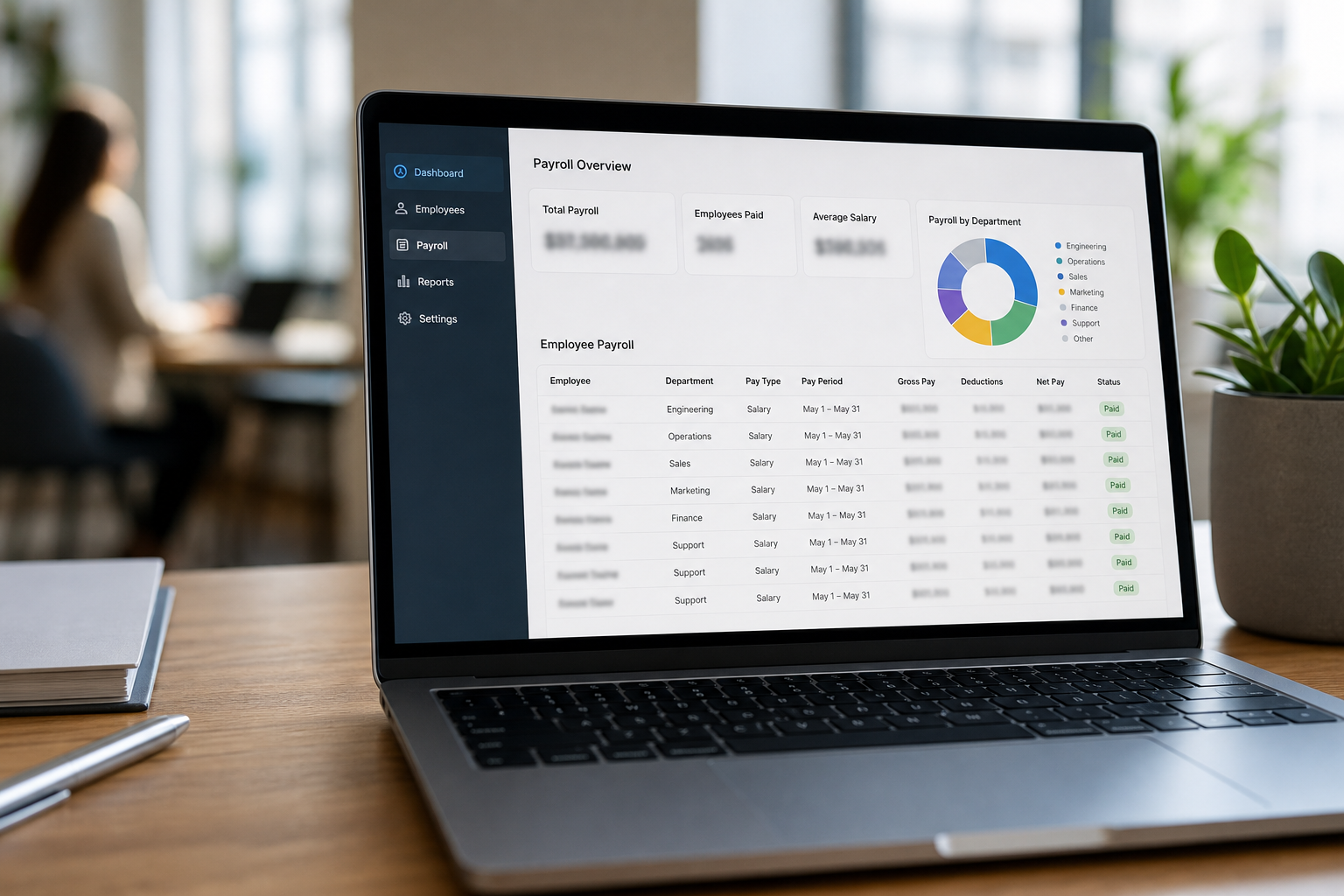
Tracking withholding and deposits in one dashboard reduces filing errors.
Minnesota DHS Providers Face Extra Payroll Complexity
Minnesota DHS-licensed providers, including 245D HCBS, 245A, home care, PCA, and waivered services agencies, often run more complicated payroll than a typical small business. Staffing patterns shift with client schedules, and background study requirements under NETStudy 2.0 add another layer most generic providers never see.
Because of this, a payroll tax filing company that also understands DHS reevaluations, DWRS rate audits, and corrective action plans can save a provider from scrambling during an audit. HAR Financial Services built its sharpest specialty around exactly this niche, pairing payroll tax filing with licensing and compliance support for Minnesota's human services sector.
How HAR Financial Services Handles Minnesota Payroll Tax Filing
Since 2006, HAR Financial Services has grown into one of the longer-standing accounting firms in Minnesota, now serving more than 600 clients, 240 of whom are active payroll clients. The firm works in person from its Minneapolis office at 2304 Park Ave S, and clients get direct access to the person handling their books rather than a ticket queue.
Payroll runs through HARpay, the firm's own platform for direct deposit, withholding, and payroll tax filings across Minnesota and Wisconsin. Meanwhile, bookkeeping runs through HARbooks, so payroll entries reconcile with the general ledger automatically. New clients currently qualify for free catch-up bookkeeping and a free consultation through HAR Financial Services' website, with no charge until after that first conversation. Businesses can also visit haraccounting.com directly to review current service offerings.
Common Payroll Tax Mistakes Minnesota Employers Make
Even careful business owners run into the same handful of mistakes. First, misclassifying a worker as a contractor instead of an employee can trigger back taxes and penalties once discovered. Second, using the wrong deposit schedule after crossing a payroll size threshold catches many growing businesses off guard.
Similarly, forgetting to update unemployment insurance rates after a new rate notice arrives leads to underpayment that surfaces later. Finally, switching payroll systems mid-year without transferring year-to-date totals often produces incorrect W-2s. In contrast, a dedicated payroll tax filing company builds these checks into its routine process, so they rarely slip through. According to IRS guidance, failure-to-deposit penalties generally start at 2% of the unpaid amount and increase the longer the deposit remains outstanding, which makes early correction far cheaper than waiting.

Tracking deadlines closely is part of what any Minnesota payroll tax filing company should handle for a client.
Frequently Asked Questions About Minnesota Payroll Tax Filing Company Services
What is a Minnesota payroll tax filing company?
A Minnesota payroll tax filing company is a bookkeeping or accounting firm that calculates, deposits, and reports state and federal payroll taxes on behalf of an employer. It handles withholding, unemployment insurance, and the filings that keep a business compliant with the IRS and the Minnesota Department of Revenue.
How does Minnesota payroll tax filing differ from federal payroll tax filing?
Federal payroll tax filing covers Social Security, Medicare, and federal income tax withholding reported to the IRS, while Minnesota payroll tax filing adds state income tax withholding and unemployment insurance reported separately to state agencies. As a result, businesses must track both sets of deadlines, since they rarely line up exactly.
Why do Minnesota businesses need a dedicated payroll tax filing company?
Minnesota businesses need a dedicated provider because payroll tax rules change often and penalties accrue quickly after a missed deposit. A specialist tracks rate changes, deadlines, and new-hire reporting so the owner does not have to monitor state bulletins personally.
How much does a Minnesota payroll tax filing company typically cost?
Pricing usually depends on employee count and filing frequency, with most firms charging a base monthly fee plus a per-employee rate. In addition, many Minnesota providers bundle payroll tax filing with payroll processing and bookkeeping, which often costs less than paying for each service separately.
How long does it take to switch payroll tax filing providers?
A clean switch typically takes two to four weeks when it is timed to a quarter end. This gives the new provider time to set up state and federal tax accounts, migrate wage history, and confirm the first filing before it is due.
What payroll tax deadlines do Minnesota employers need to track?
Minnesota employers generally track federal deposit schedules set by the IRS, quarterly Form 941 filings, state withholding deposits to the Minnesota Department of Revenue, and quarterly unemployment insurance wage reports. Because deadlines vary by deposit schedule, a missed one can trigger penalties fast.
What happens if a business misses a Minnesota payroll tax deadline?
Missing a deadline usually triggers a late-deposit penalty that increases the longer the payment is outstanding, plus interest on the unpaid balance. Furthermore, repeated misses can draw closer scrutiny from state and federal agencies during future filings.
Can a bookkeeping firm also handle Minnesota payroll tax filing?
Yes, many bookkeeping firms also offer payroll tax filing, and this combination often works better than separate vendors. When one firm handles both, payroll entries reconcile automatically with the general ledger instead of requiring manual cross-checks.
What's the difference between payroll processing and payroll tax filing?
Payroll processing covers calculating pay, deductions, and direct deposits for employees, while payroll tax filing covers depositing the withheld and employer-side taxes with the correct agencies. Since some providers only do one of these, it helps to confirm both are included.
What common mistakes do businesses make with Minnesota payroll taxes?
Common mistakes include misclassifying workers as contractors, using the wrong deposit schedule, and forgetting to update unemployment insurance rates after a rate notice. In addition, businesses that switch payroll systems mid-year sometimes lose track of year-to-date totals needed for accurate W-2s.
Do Minnesota DHS-licensed providers have special payroll tax considerations?
Minnesota DHS-licensed providers, including 245D and home care agencies, often have more complex staffing patterns tied to waivered services and background study requirements. Therefore, a provider familiar with DHS rules can align payroll records with the documentation that reevaluations and audits require.
What should I look for when comparing Minnesota payroll tax filing companies?
Look for a firm that files both federal and Minnesota state taxes, offers direct access to the person handling your account, and has a track record of on-time filings. It also helps if the firm understands your industry's specific compliance requirements.
Does a Minnesota payroll tax filing company handle Wisconsin payroll too?
Some do, particularly firms serving the Minneapolis-St. Paul and western Wisconsin border region. Even so, it is worth confirming multi-state experience upfront if your business has employees working in both states.
What documents does a new client need to provide to switch providers?
New clients typically provide prior payroll tax filings, employee W-4 and state withholding forms, year-to-date payroll totals, and their federal and state tax account numbers. Having these ready speeds up the transition significantly.
Is it better to handle payroll taxes in-house or outsource them?
Outsourcing generally makes sense once a business has multiple employees or limited internal accounting staff, since the cost of a missed filing often exceeds the cost of the service. On the other hand, in-house handling can work for very small teams with simple, stable payrolls.
Final Thoughts on Choosing a Minnesota Payroll Tax Filing Company
Ultimately, the right Minnesota payroll tax filing company does more than submit forms on time. It understands state-specific rules, communicates directly instead of through a call queue, and adapts when something unexpected happens, like a processor shutting down mid-year. For Minnesota and Wisconsin businesses with real payroll complexity, including DHS-licensed providers managing waivered services, that combination of compliance knowledge and direct access matters more than a low base price. Businesses ready to compare options can review HAR's related guide on business tax preparation in Minneapolis or book a free consultation to see how a dedicated Minnesota payroll tax filing company would handle their specific payroll.